
Pigeon Forge, Tennessee sits at the heart of the Smoky Mountains tourism corridor — welcoming over 12.5 million visitors annually to the area and driving one of the strongest vacation rental markets in the Southeast. Cabins here can generate $40,000 to $90,000+ in annual gross rental income, making them attractive investments for both local buyers and out-of-state investors.
But here's what many first-time cabin buyers overlook: insuring a vacation rental cabin is fundamentally different from insuring a primary residence. Standard homeowners insurance doesn't cover short-term rental activity. If you're renting your cabin through Airbnb, VRBO, or a local property management company, you need specialized coverage — and getting it wrong could leave you exposed to six-figure losses.
At All Seasons Insurance Group, we've helped hundreds of Sevier County cabin owners structure the right insurance package for their investment. This guide breaks down every coverage type you need, the local regulations that affect your policy, and the specific risks unique to Pigeon Forge properties.
Why Standard Homeowners Insurance Won't Protect Your Pigeon Forge Cabin
The most common mistake new cabin investors make is assuming their homeowners or landlord policy covers short-term rental guests. It doesn't. Here's why:
- Occupancy classification matters. Insurance companies classify properties by use — owner-occupied, long-term rental, or short-term rental. Each classification carries different risk profiles and policy requirements. A standard HO-3 homeowners policy is designed for owner-occupied homes and explicitly excludes "business activities," which includes renting to paying guests.
- Guest turnover multiplies risk. A cabin that hosts 150+ different guest groups per year faces dramatically higher wear-and-tear, liability exposure, and property damage risk than a home occupied by a single family. Insurers price this difference into specialized STR policies.
- Hot tubs, fire pits, and mountain terrain. Pigeon Forge cabins frequently include attractive amenities — hot tubs, outdoor fire pits, game rooms, steep driveways, and multi-level decks — that create liability exposure far beyond a typical home.
Coverage Types Every Pigeon Forge Cabin Investor Needs
1. Dwelling Fire Policy (DP-3) — Your Foundation
The DP-3 is the gold standard for investment property coverage. Unlike the more limited DP-1 (named perils only), the DP-3 is an "open perils" or "all-risk" policy that covers your cabin's structure against all damage types unless specifically excluded.
What the DP-3 covers for your Pigeon Forge cabin:
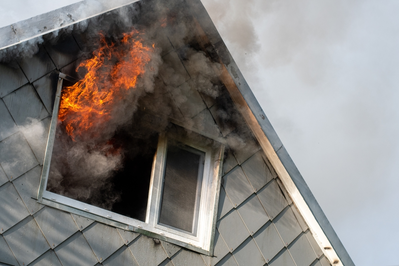
- Fire and lightning — critical in wooded mountain areas where wildfire risk exists
- Wind and hail damage — Smoky Mountain storms can be severe, especially during spring and summer
- Vandalism and theft — guest turnover creates exposure you wouldn't have with a primary home
- Water damage from burst pipes or appliance failures (frozen pipes are a real risk in mountain cabins during winter months when units may sit unoccupied between bookings)
- Falling trees and objects — mountain properties surrounded by mature timber face this risk regularly
Critical detail: Always insure your cabin for replacement cost value (RCV), not actual cash value (ACV). With Sevier County construction costs averaging $175–$250 per square foot for cabin-style builds, an underinsured property can trigger coinsurance penalties that reduce your claim payout by 20–40%.
2. Loss of Rental Income Coverage
If your cabin is damaged and uninhabitable, you lose bookings. During peak seasons (June–August, October leaf season, December–January holidays), a Pigeon Forge cabin can generate $800–$2,500+ per week. A two-month repair period during peak season could mean $10,000–$20,000 in lost revenue.
Loss of rental income coverage (also called "business income" or "fair rental value" coverage) reimburses your expected rental income while repairs happen. Without it, you're still paying your mortgage, property taxes, and management fees on a property generating zero income.
3. Commercial General Liability (CGL) — $1 Million Minimum
Sevier County's short-term rental permit requires proof of at least $1,000,000 in liability coverage. But liability protection isn't just about meeting regulations — it's about protecting your personal assets.
Consider the liability scenarios specific to Pigeon Forge cabins:
- Hot tub injuries — slip and falls, burns, drowning risks (especially with children)
- Deck collapses or railing failures — multi-story cabins with large decks face structural liability
- Steep driveway accidents — mountain driveways can be treacherous in rain, ice, or fog
- Fire pit incidents — open flames near wooded areas create both injury and wildfire liability
- Wildlife encounters — bears are active throughout Sevier County, and guests unfamiliar with wildlife safety may create situations that lead to injury claims
- Game room equipment — pool tables, arcade machines, and other amenities create additional injury exposure
4. Tenant (Guest) Damage Coverage
Guest damage is the reality of cabin ownership. Broken furniture, stained carpets, damaged appliances, and hot tub motor burnouts are regular occurrences. Standard DP-3 policies typically exclude damage caused by tenants or guests unless you add a specific endorsement.
Some property management companies in Pigeon Forge (like Cabins for You, Volunteer Cabin Rentals, and others) offer their own property protection plans — but these are guest-facing protections that supplement, not replace, your owner-level insurance. For example, many local management companies require a mandatory Property Protection Plan from guests, typically covering $1,500–$2,500 in accidental damage. That's good — but a guest who causes $15,000 in damage isn't fully covered by a $2,500 protection plan.
5. Equipment Breakdown Coverage
Pigeon Forge cabins are loaded with mechanical systems that standard property policies may not fully cover:
- Hot tub pumps, heaters, and control systems ($3,000–$8,000 to replace)
- HVAC systems handling mountain temperature swings (summer cooling, winter heating)
- Well pumps and septic systems (common on mountain properties not served by municipal water/sewer)
- Generator systems (many mountain cabins have backup generators for power outages)
- Game room electronics and entertainment systems
An equipment breakdown endorsement adds coverage for these mechanical and electrical failures that aren't caused by a named peril. Cost is typically $50–$150 per year — well worth it given the replacement costs above.
Sevier County Short-Term Rental Regulations That Affect Your Insurance
Pigeon Forge and Sevier County have specific regulatory requirements that directly impact your insurance needs:
Permit Requirements
- City Business License: Required for all STR operators within Pigeon Forge city limits. Apply through the City Recorder's Office at City Hall.
- Short-Term Rental Permit: Separate permit required on top of the business license. Initial application fee of $150, with annual renewal at $50.
- Property Inspection: Your cabin must pass a safety inspection before permit approval — covering fire safety, structural integrity, and occupancy compliance.
- Insurance Documentation: Proof of $1,000,000 minimum liability insurance is required at permit application and each renewal. Your insurer must provide a Certificate of Insurance (COI) naming the city.
- Non-Transferable: Permits don't transfer with property sales. Buyers must apply for a new permit after closing.
Zoning Considerations
STRs are generally permitted in Tourist Commercial (TC), Intermediate Commercial (IC), and Highway Commercial (HC) zones within Pigeon Forge city limits. Properties in residential zones may have different requirements or restrictions. Before purchasing a cabin specifically for rental investment, verify the zoning designation with the Pigeon Forge Planning Department.
Tax Collection Requirements
Sevier County charges a combined hotel/motel occupancy tax on all short-term rentals. As a cabin owner, you're responsible for collecting this tax from guests and remitting it to the county. Your insurance should account for the business activity this creates — another reason a standard homeowners policy falls short.
Pigeon Forge-Specific Risks Your Policy Must Address
Wildfire Risk
The 2016 Gatlinburg wildfires destroyed or damaged over 2,500 structures across Sevier County. While Pigeon Forge sustained less damage than Gatlinburg, the entire Smoky Mountains corridor carries elevated wildfire risk. Your DP-3 policy should include fire coverage with replacement cost valuation — and you should verify that your coverage amount keeps pace with rising construction costs.
Flooding and Water Damage
Mountain streams and tributaries run throughout Sevier County. Properties near the Little Pigeon River or mountain streams may fall in FEMA flood zones requiring separate flood insurance. Even properties outside designated flood zones should consider flood coverage — Tennessee flood insurance costs range from $300–$600 annually for preferred-risk properties in Zone X (low-to-moderate risk).
Winter Weather and Vacancy
Mountain cabins face unique winter risks: frozen pipes during cold snaps (Pigeon Forge sees overnight lows in the teens during January and February), ice damage to decks and roofing, and tree limbs breaking under snow and ice loads. Cabins that sit vacant between winter bookings are especially vulnerable. Many insurers require a vacancy endorsement if your cabin will be unoccupied for more than 30 consecutive days — otherwise, claims may be denied.
Steep Terrain and Access
Many Pigeon Forge cabins sit on steep mountain lots with winding driveways. This creates both liability exposure (guest vehicle damage, pedestrian falls) and structural risks (erosion, foundation issues, retaining wall failures). Consider whether your policy covers earth movement and foundation damage, or whether you need additional endorsements.
How Much Does Cabin Investment Insurance Cost in Pigeon Forge?
Insurance costs for Pigeon Forge vacation rental cabins vary significantly based on the property, but here are the ranges we typically see:
- DP-3 Dwelling Policy: $1,800–$4,500/year for a typical 2–4 bedroom cabin (depending on construction, value, and claims history)
- Commercial General Liability ($1M): $400–$900/year
- Umbrella Policy ($1M): $300–$600/year
- Flood Insurance (if needed): $300–$2,500/year (depends on FEMA zone designation)
- Equipment Breakdown: $50–$150/year
Total typical range: $2,850–$8,650 per year for comprehensive coverage on a standard vacation rental cabin. That's roughly 5–10% of gross rental income — a reasonable cost of doing business for an asset generating $40,000–$90,000+ annually.
🏔️ Get a Free Cabin Investment Insurance Quote
All Seasons Insurance Group works with multiple carriers specializing in Smoky Mountain vacation rental properties. We'll compare rates and build a coverage package tailored to your specific cabin.
Get Your Free Quote →📞 Call us: (865) 263-1400 — Serving Pigeon Forge, Gatlinburg, Sevierville & all of East Tennessee
Working with a Local Insurance Agent vs. Online Quotes
You can get cabin insurance quotes online from national carriers — but vacation rental insurance is one area where working with a local agent provides measurable advantages:
- Local risk knowledge. An agent based in Sevier County understands the specific risks of mountain properties — wildfire zones, flood-prone areas, road access issues, and construction standards that national underwriters may not account for.
- Carrier access. Many specialty carriers that offer competitive STR rates work exclusively through local agents. You won't find their quotes on comparison websites.
- Claims advocacy. When a tree falls through your cabin roof during peak leaf season, having a local agent who knows the adjuster and can advocate for fair replacement cost valuation makes a tangible difference in your claim outcome.
- Regulatory compliance. A local agent ensures your COI meets Sevier County's specific requirements for permit renewal — avoiding permit lapses that could halt your rental income.
If you're purchasing a cabin through a team like Your Home Sold Guaranteed Realty — Kings of Real Estate, coordinating your insurance during the buying process ensures coverage is bound at closing — not after.
Frequently Asked Questions
❓ Do I need commercial insurance for my Pigeon Forge vacation rental cabin?
Yes. Because you're renting to paying guests, your cabin is operating as a business. You need a dwelling fire policy (DP-3) rather than a standard homeowners policy, plus commercial general liability of at least $1,000,000 — which is also the minimum required by Sevier County to maintain your short-term rental permit.
❓ Does Airbnb or VRBO host insurance replace my own cabin insurance policy?
No. Airbnb's Host Protection Insurance and VRBO's liability coverage are secondary protections with significant exclusions, coverage gaps, and slow claims processes. They do not replace your own DP-3 dwelling policy or commercial liability coverage. Treat platform protections as a last-resort backup, not your primary insurance.
❓ How much does it cost to insure a vacation rental cabin in Pigeon Forge?
Comprehensive insurance for a typical 2–4 bedroom Pigeon Forge vacation rental cabin costs $2,850–$8,650 per year, depending on the property value, location, amenities, and claims history. This includes dwelling coverage, liability, and optional endorsements like flood and equipment breakdown.
❓ Is flood insurance required for Pigeon Forge cabins?
If your cabin is in a FEMA-designated high-risk flood zone and you have a federally backed mortgage, flood insurance is required. Even if it's not required, properties near the Little Pigeon River, mountain streams, or in low-lying areas should strongly consider flood coverage — costs range from $300–$600/year for preferred-risk properties outside designated flood zones.
❓ What happens if my cabin is damaged and I can't rent it?
Loss of rental income coverage (also called business income coverage) reimburses your expected rental revenue while your cabin is being repaired after a covered loss. Without this coverage, you continue paying your mortgage, taxes, and management fees on a property generating zero income. This coverage is essential for investment properties.