Homeowners Insurance Rates in Sevierville, TN: What Smoky Mountain Homeowners Need to Know
Sevierville sits at the foot of the Great Smoky Mountains, where rolling ridgelines, winding mountain streams, and an exploding short-term rental economy create a property insurance landscape unlike almost anywhere else in East Tennessee. Whether you own a full-time residence on a quiet Sevier County road, a log cabin rented out to visitors on Airbnb, or a newer construction home near the Little Pigeon River, your homeowners insurance rate is shaped by a specific set of local risks that differ considerably from the rest of the state. This guide walks through average rates, the factors that move them up or down, and the coverage decisions that matter most for property owners in the Smokies.
Average Homeowners Insurance Rates in Sevierville and Sevier County
Sevier County homeowners pay an average of $2,390 per year—or about $199 per month—for a standard homeowners insurance policy with $300,000 in dwelling coverage, according to county-level rate data compiled by Insurance.com. That places Sevier County at one of the more affordable points within East Tennessee, where neighboring counties such as Monroe ($2,758), Polk ($2,823), and Morgan ($2,943) carry higher average premiums, largely due to greater wildfire exposure or more isolated rural locations.
At the state level, Tennessee homeowners pay an average of $2,672 per year for $300,000 in dwelling coverage, which is modestly above the national average of $2,424, according to Bankrate's 2026 rate analysis. Depending on the data source and the coverage assumptions used, published Tennessee averages range from roughly $2,095 to $2,958 annually for $300,000 in dwelling coverage—variation that reflects differences in carrier mix, policy deductibles, and the geographic distribution of sample ZIP codes. For Sevier County, the takeaway is that local rates sit below the Tennessee statewide average, but that figure can shift considerably based on the specific characteristics of a property.
Rate Comparison by Dwelling Coverage Level (Sevier County Estimates)
| Dwelling Coverage | Estimated Annual Premium | Estimated Monthly Premium | Typical Profile |
|---|---|---|---|
| $200,000 | $1,500 – $1,900 | $125 – $158 | Older or smaller frame home, full-time residence |
| $300,000 | $2,100 – $2,600 | $175 – $217 | Mid-size primary home, county average benchmark |
| $400,000 | $2,700 – $3,300 | $225 – $275 | Larger primary home or newer construction cabin |
| $500,000 | $3,200 – $4,000 | $267 – $333 | Custom log cabin or higher-value vacation property |
| $750,000 | $4,500 – $6,000 | $375 – $500 | Large cabin, STR with high replacement cost |
| $1,000,000 | $6,000 – $8,500 | $500 – $708 | High-end resort-style property, specialty policy |
Note: Estimates are based on statewide Tennessee rate data from Bankrate, NerdWallet, and Insurance.com scaled to Sevier County's historical positioning below the state average. Actual premiums depend on carrier, construction type, claims history, and property-specific risk factors. Rates for short-term rental properties require separate policy structures and will differ from the above.
The 2016 Chimney Tops Fire and Its Lasting Insurance Legacy
No discussion of property insurance in Sevier County is complete without addressing the November 2016 Chimney Tops wildfire, which remains the defining catastrophic loss event in the county's modern history. Driven by severe drought and gale-force winds, the fire burned more than 17,000 acres, damaged or destroyed 2,460 structures, and caused 14 deaths. Insurance carriers paid out nearly $800 million across more than 2,866 closed claims, according to data reported by United Policyholders—losses that approached $1 billion when uninsured and underinsured properties were factored in.
That event fundamentally changed how carriers assess wildfire risk in the Smokies region. Sevier County now carries a wildfire risk rating higher than roughly 79 percent of all counties in the United States, according to the National Risk Index maintained by the U.S. Forest Service's Wildfire Risk to Communities tool. For individual homeowners, this translates to underwriting scrutiny that was not present a decade ago: carriers now evaluate slope, vegetation density, proximity to ridgelines, roof material, and defensible space when pricing policies on mountain properties. Some carriers that previously offered standard homeowners policies in rural mountain areas have tightened eligibility, requiring specialty or surplus-lines coverage for properties with the highest wildfire exposure.
Flash Flood Risk Along the Little Pigeon River and Mountain Streams
Water is the second major risk driver for Sevier County property owners. The Little Pigeon River and its tributaries drain a steep, heavily forested watershed that channels rainfall rapidly into valley floor communities. Flash flooding along the Little Pigeon River has stranded visitors and damaged properties in Sevierville on multiple occasions, including a July 2025 event in which pop-up storms produced flooding severe enough to require rescue operations. FEMA has an active Flood Insurance Rate Map (FIRM) for both Sevier County and the City of Sevierville, with a map update that was nearing completion as of late 2025.
First Street Foundation's independent flood modeling estimates that approximately 26.5 percent of all properties in Sevierville face flood risk—with 1,369 properties currently at risk rising to 1,929 over a 30-year mortgage horizon. That represents more than one in four Sevierville properties with meaningful flood exposure. The critical point for homeowners is that standard homeowners insurance does not cover flood damage. Flood coverage must be purchased separately, either through the National Flood Insurance Program (NFIP) or a private flood insurer. Properties in designated Special Flood Hazard Areas (FEMA Zones A or V) with federally backed mortgages are legally required to carry flood insurance, but even properties outside mapped flood zones can experience significant water damage from the region's fast-moving mountain streams.
Factors That Move Your Sevierville Rate Up or Down
Beyond the two headline risks—wildfire and flooding—several property-specific factors have a measurable impact on homeowners insurance premiums in Sevier County.
Construction type: log cabin vs. frame. The Smokies region has a high concentration of log and timber-frame cabins, both as primary residences and vacation rentals. Log homes generally cost more to insure than standard stick-frame construction. The primary reason is not fire susceptibility—solid log walls are actually more fire-resistant than hollow wall cavities—but rather the higher cost to replace log or timber construction per square foot and the typically remote, difficult-to-access locations where such homes are built. Carriers factor both the replacement cost and the logistical complexity of repairs when setting premiums.
Distance from a fire station. Tennessee's insurance industry treats any property more than five road miles from a fire station as lacking adequate fire protection—a standard that is widely accepted by the ISO (Insurance Services Office) rating system used by most carriers. According to research from ValuePenguin, homes located 25 or more miles from a fire station can pay as much as 9 percent more on average than those within one mile. In rural Sevier County, where many cabins are accessed via steep, winding roads that increase effective response times even for nearby stations, distance-to-station is a meaningful underwriting variable.
Elevation and slope. Properties at higher elevations or on steep hillsides carry elevated wildfire risk because fires move faster upslope and because road access for fire suppression is more limited. Some carriers apply explicit surcharges for mountain locations, while others factor terrain implicitly through wildfire risk scores derived from satellite and geographic data.
Home age and construction materials. Statewide Tennessee data from MoneyGeek shows that a home built around 1980 costs an average of $3,203 per year to insure, compared to $1,758 for a home built in 2020—an 82 percent difference attributable primarily to updated electrical, plumbing, and roofing systems in newer construction. Older homes with aging roofs or knob-and-tube wiring are underwritten more conservatively.
Credit history. Tennessee allows carriers to use credit-based insurance scores in rate calculations. Statewide averages show premiums ranging from approximately $1,411 per year for homeowners with excellent credit to $7,905 for those with poor credit—a fivefold difference that has nothing to do with the physical property itself.
Claims history. Filing even one claim in Tennessee adds an average of $485 to annual premiums, with a second claim adding another $407, and claims typically remain on your record for five years according to MoneyGeek's analysis of statewide rate data.
Short-Term Rental Properties: A Separate Insurance Conversation
Sevier County has one of the most active short-term rental markets in the United States. Over 25,000 active STR listings now operate across the county—a figure that has grown five to six times since 2015, according to market data compiled by IMEG. In Sevierville alone, an estimated 11,779 active short-term rentals generate average nightly rates around $310 and annual revenues averaging $43,000 to $55,000 per property. The median sale price for homes in Sevierville reached $365,000 in early 2026 according to Redfin market data, though STR-heavy cabin inventory lists significantly higher—Realtor.com data puts the median listing price in the broader Sevierville market at $569,700.
This rental volume creates a critical insurance gap that many property owners discover too late. Standard homeowners insurance is written for owner-occupied residences or, in the case of landlord policies, long-term tenants with leases. Neither policy form is designed for the operational model of a short-term rental. Most standard homeowners policies exclude or severely limit coverage for damage occurring while the property is rented for brief stays. If a carrier discovers that a property is being operated as an STR under a standard homeowners policy, they may deny claims or even cancel coverage retroactively.
The City of Sevierville requires an annual Short-Term Rental Operational Permit with a life-safety inspection and proof of insurance. Unincorporated Sevier County has required an STRU permit with annual life-safety inspections since January 1, 2024. Both regulatory frameworks effectively mandate that STR operators maintain appropriate, STR-specific insurance coverage.
The correct coverage structure for a Smokies short-term rental typically includes:
- STR-specific dwelling coverage — replaces the standard homeowners dwelling form and explicitly covers rental activity
- Commercial general liability — covers guest injuries and property damage claims arising from rental use, typically with limits of at least $1,000,000
- Loss of rental income coverage — replaces booking revenue if a covered loss (fire, storm, water damage) makes the property temporarily uninhabitable
- Contents coverage — protects furniture, appliances, and guest-facing amenities from accidental damage and theft
- Umbrella liability — recommended for higher-value properties given the frequency of guest traffic and the volume of annual visitors
- Separate flood policy — required for any property near the Little Pigeon River or other flood-prone areas; not included in any STR policy form
Annual premiums for STR-specific policies in the Smokies vary widely depending on dwelling value, occupancy, and carrier. Forum data from STR investors and BiggerPockets discussions suggest premiums in the range of $1,600 to $4,900 per year for Smoky Mountain cabins, with specialty carriers such as Foremost, Berkshire Hathaway, Auto-Owners, and surplus-line carriers underwriting the majority of this market. An independent insurance agent familiar with the Sevier County STR market is the most reliable path to finding a policy that matches the property's actual use.
Common Claims in the Smokies: What Damages Sevier County Homes
Understanding the local claims environment helps homeowners calibrate both their coverage limits and their deductibles. In the Smokies region, the most frequently occurring covered perils include:
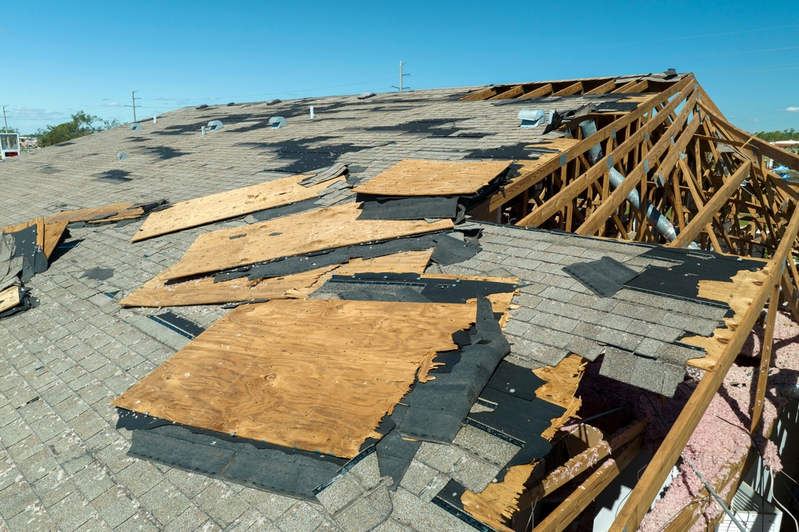
Wind damage. Mountain terrain accelerates and redirects wind, and the ridges surrounding Sevierville funnel gusts that can strip roofing, break windows, and damage siding. Standard homeowners policies cover wind damage, though some carriers apply a separate wind deductible of 1 to 2 percent of insured value—meaning a $400,000 home could carry a $4,000 to $8,000 wind deductible rather than a flat $1,000 deductible.
Fallen trees. The heavily forested terrain of Sevier County means that storm-related tree falls are among the most common sources of property claims. Homeowners insurance typically covers structural damage from a tree that falls due to a covered peril such as wind, regardless of whether the tree originated on the insured's property or a neighbor's. Debris removal is generally covered only when the tree has damaged a structure.
Hail. Spring and early summer hailstorms affect East Tennessee regularly, causing granule loss on asphalt shingles, dents in metal components, and long-term water intrusion if not addressed promptly. Standard homeowners policies cover hail damage, though the same percentage-deductible issue that applies to wind can affect hail claims as well under some policy forms.
Water damage from plumbing and appliances. Sudden and accidental water discharge from burst pipes, appliance malfunctions, or HVAC condensate lines is a leading source of indoor water damage claims. Vacancy in STR properties between guest stays can allow slow leaks to go undetected, making water sensor monitoring systems a practical loss-control measure.
Wildfire. While the 2016 event remains the catastrophic benchmark, smaller brush and structure fires occur throughout the county. Homes on wooded mountain lots with limited defensible space carry ongoing wildfire exposure that should be reflected in adequate dwelling coverage limits.
Coverage Adequacy: Are You Insured to Replacement Cost?
One of the most consequential decisions a Sevierville homeowner makes is setting dwelling coverage limits. Market value and insurance replacement cost are not the same number. The median sale price in Sevierville in early 2026 was approximately $365,000, but the replacement cost—what it would actually cost to rebuild a comparable structure from the ground up using current labor and material pricing—may be substantially higher or lower depending on the property type.
Log and timber-frame cabins are among the most expensive residential construction types to replace per square foot, which means a cabin purchased for $450,000 might carry a replacement cost of $600,000 or more. Insuring to actual replacement cost rather than purchase price is the only way to avoid a coinsurance shortfall after a total loss. Many policies include an inflation guard endorsement that automatically adjusts coverage limits annually, but homeowners should verify that their stated dwelling limit reflects current construction costs—which rose substantially between 2020 and 2024 due to supply chain disruptions and labor cost increases.
About All Seasons Insurance Group
All Seasons Insurance Group is an independent insurance agency headquartered at 1001 Parkway in Sevierville, Tennessee, with an additional location in Knoxville. Operating since 2021, All Seasons serves homeowners, auto insurance customers, and business owners across East Tennessee, offering access to multiple carriers rather than a single company's product lineup. As an independent agency, All Seasons can compare policy options across carriers to match coverage to a specific property's risk profile—a meaningful advantage in a market as varied as Sevier County, where a riverfront primary residence, a mountaintop log cabin, and a short-term rental cabin in Pigeon Forge each require a different underwriting conversation. All Seasons can be reached at 865-263-1400, Monday through Friday 9:00 a.m. to 7:00 p.m. and Saturday 9:00 a.m. to 1:00 p.m.
If you are buying or selling a home in the Sevierville area and need guidance on how a property's location and characteristics affect insurability, Your Home Sold Guaranteed Realty (kingsofrealestate.com) serves the Smoky Mountain real estate market and can connect buyers with the market knowledge needed to evaluate a property before closing.
Frequently Asked Questions: Homeowners Insurance in Sevierville, TN
How much does homeowners insurance cost in Sevierville, Tennessee?
The average homeowners insurance premium in Sevier County is approximately $2,390 per year, or about $199 per month, for a policy with $300,000 in dwelling coverage and a $1,000 deductible. This is below the Tennessee statewide average of roughly $2,672 per year and the national average of approximately $2,424 per year for comparable coverage. Actual premiums vary based on dwelling coverage amount, construction type, proximity to fire stations, claims history, and whether the property is used as a short-term rental.
Does standard homeowners insurance cover my Sevierville cabin if I rent it on Airbnb or VRBO?
No. Standard homeowners insurance policies are designed for owner-occupied residences and do not cover commercial rental activity. If a carrier discovers that a property covered under a standard policy is being operated as a short-term rental, they may deny claims or cancel the policy. Short-term rental properties in Sevier County require a specialized STR policy or a commercial policy that explicitly covers rental use, guest liability, and loss of rental income. The City of Sevierville and Sevier County both require proof of appropriate insurance as part of the STR permitting process.
Is flood insurance required in Sevierville, and does my homeowners policy cover flooding?
Standard homeowners insurance does not cover flood damage under any circumstances. Flood coverage must be purchased separately through the National Flood Insurance Program or a private flood insurer. Homeowners with federally backed mortgages whose properties fall within FEMA-designated Special Flood Hazard Areas along the Little Pigeon River or other Sevier County waterways are legally required to carry flood insurance. First Street Foundation estimates that approximately 26.5 percent of all Sevierville properties face meaningful flood risk—including many properties not in FEMA's mapped zones—making flood insurance worth evaluating for any home near mountain streams or valley floor locations.
Does the 2016 Gatlinburg wildfire affect insurance availability or rates in Sevier County today?
Yes. The 2016 Chimney Tops fire, which burned more than 17,000 acres and generated nearly $800 million in insurance claims, prompted carriers to take a closer look at wildfire underwriting across the entire Smokies region. Sevier County now carries a wildfire risk rating higher than approximately 79 percent of all U.S. counties. Some carriers have tightened eligibility for rural mountain properties, and properties with significant wildfire exposure may require specialty or surplus-lines coverage. Factors such as roof material, defensible space, access road conditions, and vegetation management around the structure can influence both availability and pricing.
Are log cabins more expensive to insure than standard frame homes in the Smokies?
Generally yes. Log and timber-frame cabins typically carry higher insurance premiums than standard stick-frame homes of similar market value for two primary reasons: the higher cost per square foot to replace log or timber construction, and the frequently remote locations of such properties, which affect fire response times and repair logistics. If a log cabin is also operated as a short-term rental—common in the Smokies—the added complexity of STR coverage further separates the insurance cost from that of a conventional primary residence. Working with an independent agent who specializes in mountain property coverage is the most effective way to find competitive pricing for a log or timber-frame home in Sevier County.
About the Author
All Seasons Insurance Group is a locally owned, independent insurance agency proudly serving Tennessee families and businesses since 2021. Founded by Tannor Giles and Preston Stewart, our licensed team is committed to finding the best coverage at competitive rates — because as an independent agency, we shop multiple carriers on your behalf to get you the right policy, not just the cheapest one.
With offices in Sevierville (1001 Parkway) and Knoxville (121 Suburban Rd), we specialize in home, auto, business, farm, renters, and investment property insurance across East Tennessee — from the Smoky Mountains to Nashville.
Ready to review your coverage? Call us at (865) 263-1400 or get a free quote online.
Seasons change. So should your coverage.