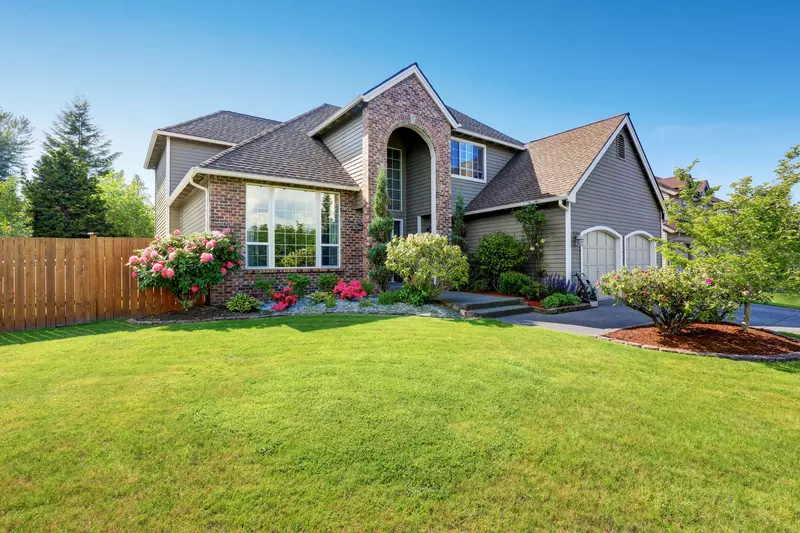
Landlord Insurance in Maryville TN: What Property Owners Need to Know
Owning a rental property in Maryville, Tennessee comes with real financial exposure. Landlord insurance—distinct from a standard homeowners policy—is the coverage layer that protects your dwelling, your liability, and your rental income when things go wrong. Here is what every Blount County property owner should understand before signing or renewing a policy.
Why a Standard Homeowners Policy Is Not Enough
Many first-time landlords assume their existing homeowners insurance will cover a rental property. It will not. A standard homeowners policy (HO-3) is written for owner-occupied residences. The moment you rent your property to a tenant, most homeowners carriers will void or restrict coverage because the risk profile changes substantially. Tenant turnover, deferred maintenance habits, and liability from third-party injuries on the premises all represent exposures that a homeowners policy is not designed to absorb.
Landlord insurance—also called a dwelling fire policy or rental property policy—is the correct product for non-owner-occupied residential property. According to the Insurance Information Institute via Steadily, a landlord policy costs about 25% more than a comparable homeowners policy. In Tennessee, that puts the typical annual premium between roughly $1,017 and $1,540 per year depending on coverage level, property characteristics, and location within the state.
The Maryville and Blount County Rental Market
Maryville is one of the most desirable rental markets in East Tennessee, and the data reflects sustained demand. Realtor.com puts the median monthly rental price in Maryville at approximately $2,000 per month, while Zumper reports the citywide average at $1,735 for apartments. Blount County as a whole carries a median rent of $1,850 according to Realtor.com market data.
Several structural factors keep rental demand elevated in this corner of East Tennessee:
- Population growth: Blount County has grown steadily every year since 2000, reaching approximately 142,200 residents in 2024. Domestic migration—people relocating from higher-cost states—has been the primary driver, and those new arrivals need housing.
- Maryville College: The college enrolls approximately 1,151 students on a 263-acre campus, generating consistent off-campus rental demand in the surrounding neighborhoods.
- Healthcare employment: Prisma Health Blount Memorial Hospital anchors a large healthcare employment base in the city, providing a steady pool of stable, working renters.
- Proximity to Knoxville: Maryville sits within 20 miles of downtown Knoxville and benefits from overflow rental demand as workers seek more affordable communities along the US-129 and US-411 corridors.
Tennessee’s statewide rental vacancy rate was 8.2% in 2024 according to Federal Reserve data, generally consistent with moderate-to-healthy occupancy conditions. For Blount County landlords, properties in well-maintained condition near schools, employers, and transit corridors typically see shorter vacancy windows than the state average.
What Landlord Insurance Actually Covers
A comprehensive landlord policy is built around three core coverage pillars. Understanding each one helps you evaluate whether your current policy leaves gaps.
Dwelling Coverage
Dwelling coverage (Coverage A) pays to repair or rebuild the physical structure of your rental property after a covered loss: fire, windstorm, hail, lightning, vandalism, and depending on the policy form, many other perils. It also typically extends to attached structures like garages and covered porches. The amount of dwelling coverage should reflect the full replacement cost of the home—what it would cost to rebuild from the ground up using current labor and materials—not the market value or the outstanding mortgage balance.
Liability Coverage
Liability coverage protects you if a tenant, guest, or visitor is injured on your property and holds you legally responsible. A slip on an icy walkway, a fall from a defective stair, a dog bite involving an animal you knew about—these are real scenarios that result in costly lawsuits. Standard landlord liability limits start at $100,000, but many advisors recommend $300,000 or more, with an umbrella policy layered on top for properties with higher foot traffic or older structures.
It is important to distinguish landlord liability from tenant liability. Your policy covers your negligence as the property owner. It does not cover a tenant who injures a guest inside the unit, or a tenant whose negligent act damages a neighbor’s property. Tenants need their own renters insurance (an HO-4 policy) to cover their personal liability. Tennessee landlords can legally require proof of renters insurance as a lease condition, which is a practical way to reduce risk exposure on both sides of the landlord-tenant relationship.
Loss of Rental Income
If a covered peril—say, a kitchen fire or storm damage—renders your rental uninhabitable, your tenants stop paying rent while repairs are underway. Loss of rental income coverage (sometimes called fair rental value coverage) reimburses you for that lost revenue during the repair period, up to the policy limits. For a property generating $1,800 to $2,000 per month in rent, even a two-month vacancy due to repairs represents a $3,600 to $4,000 shortfall. This coverage is one of the most financially meaningful components of a landlord policy, and it is worth confirming it is included rather than treating it as assumed.
DP-1 vs. DP-3: Choosing the Right Policy Form
Landlord insurance is typically written on one of two dwelling fire forms. The choice between them has significant consequences for how—and how much—a claim pays out.
| Feature | DP-1 (Basic Form) | DP-3 (Special Form) |
|---|---|---|
| Coverage type | Named perils only | Open perils (all causes except exclusions) |
| Perils covered | Fire, lightning, wind, hail, explosion, riot, smoke, vehicles, aircraft (9 named) | Everything except specific exclusions (flood, earthquake, ordinance/law, intentional loss, etc.) |
| Water damage (burst pipe) | Typically excluded | Typically covered |
| Theft and vandalism | Often excluded or requires endorsement | Included |
| Claim settlement | Actual Cash Value (depreciation deducted) | Replacement Cost Value (full rebuild cost) |
| Loss of rental income | Sometimes excluded or limited | Typically included |
| Liability coverage | Optional add-on | Usually included |
| Typical annual cost | $700–$900 | $1,100–$1,300 |
| Best suited for | Vacant properties, older homes, budget constraints | Active rental properties where maximum protection matters |
The practical difference between these forms shows up starkly at claim time. Consider a 15-year-old roof that sustains hail damage requiring a $20,000 replacement. On a DP-3 with replacement cost coverage, the insurer pays $17,500 after a $2,500 deductible. On a DP-1 with actual cash value settlement, a 75% depreciation factor reduces the payout to roughly $2,500 after the same deductible—leaving the landlord responsible for $17,500 out of pocket. The DP-3 premium premium is typically 30% to 50% higher than a DP-1, but in most claim scenarios, that difference in annual premium is far smaller than the difference in what the policy pays.
For most active rental properties in Maryville, a DP-3 is the recommended policy form. A DP-1 may be appropriate for a property that is temporarily vacant between tenants, a lower-value property where the premium savings are meaningful, or a home that cannot qualify for DP-3 underwriting due to age or condition.
Blount County Property Considerations
East Tennessee’s geography and weather patterns introduce specific risks that Blount County landlords should account for when selecting coverage limits and endorsements.
Severe weather: Tennessee experiences regular severe thunderstorm activity, including hail events and high winds. The Great Smoky Mountains to the south of Blount County create localized weather patterns. Hail coverage is included in both DP-1 and DP-3 policies, but the claim settlement method matters: only a DP-3 with replacement cost coverage fully compensates for roof replacement.
Older housing stock: Maryville has a mix of newer subdivisions and older in-town rental stock, including homes built in the 1950s through 1980s. Older properties may require a four-point inspection (roof, HVAC, electrical, plumbing) to qualify for DP-3 coverage. If the property does not pass, a DP-1 may be the only available form until updates are made. This is a common reason landlords find themselves on basic coverage they did not intend to carry long-term.
Flood exposure: Neither DP-1 nor DP-3 covers flood damage. Properties near Little River, Pistol Creek, or other Blount County waterways may carry meaningful flood risk. A separate National Flood Insurance Program (NFIP) policy or private flood policy should be considered for any property in or near a designated flood zone.
Vacancy clauses: Standard landlord policies typically restrict or exclude coverage after the property has been continuously vacant for 30 to 60 days. Landlords who experience extended vacancy between tenants should notify their insurer and may need a vacancy endorsement or a separate vacant property policy to maintain protection.
Tennessee Landlord-Tenant Law and Insurance Implications
Tennessee’s landlord-tenant framework creates several insurance-relevant obligations for property owners in Blount County.
Habitability standard: Under Tennessee law (TN Code § 66-28-304), landlords must maintain rental properties in a safe and habitable condition—functional plumbing, heating, electrical systems, structural integrity, and freedom from known hazards. Failure to meet this standard not only creates legal liability but can complicate insurance claims if deferred maintenance contributed to a loss. Insurers routinely investigate whether negligence or lack of upkeep played a role before paying a claim.
Repair timelines: Tennessee law generally gives landlords 14 days to address non-emergency repair requests made in writing by tenants. Documented failure to act can support a tenant’s liability claim and may be used as evidence that the landlord had prior knowledge of a hazardous condition. Maintaining repair records and responding promptly protects both your legal position and your insurability.
Fair housing: The Tennessee Human Rights Act and the federal Fair Housing Act prohibit housing discrimination based on race, color, religion, sex, national origin, disability, and familial status (TN Code § 4-21-601). These laws apply to every stage of the rental process, including how you screen tenants and what lease terms you enforce. Discrimination claims can result in civil penalties, court-ordered damages, and litigation costs—all of which underline the importance of adequate liability coverage as part of a landlord policy.
Renters insurance requirements: Tennessee law does not require tenants to carry renters insurance, but landlords may require it as a lease condition. Specifying minimum coverage amounts and requiring proof before move-in is a standard risk management practice. When tenants have their own liability coverage, accidental damage claims that originate with the tenant’s actions are more likely to be handled by the tenant’s insurer rather than flowing directly to the landlord.
Insurance disclosure: Tennessee lease law requires landlords to state in writing that they are not responsible for providing fire or casualty insurance for a tenant’s personal belongings. This disclosure sets clear expectations and is one reason experienced landlords include renters insurance requirements in their standard lease language.
Tenant Liability vs. Landlord Liability: Understanding the Distinction
One of the most common misconceptions among new landlords is believing that their policy covers everything that happens on the property. It does not. Landlord liability coverage protects you against claims arising from your negligence as the property owner: a loose railing you knew about and did not fix, a poorly lit parking area that caused a fall, a structural defect in the common area of a multi-unit building.
Tenant liability, by contrast, covers the tenant’s own actions. If a tenant accidentally starts a kitchen fire that damages the neighboring unit, that is a claim that should flow through the tenant’s HO-4 renters policy—not yours. If a tenant’s guest is injured inside the unit due to the tenant’s negligence, again the tenant’s liability coverage responds first. When tenants do not have renters insurance, those claims often end up directed at the landlord, creating disputes and legal costs even when the landlord did nothing wrong. Requiring renters insurance as a lease condition reduces this exposure substantially.
About All Seasons Insurance Group
All Seasons Insurance Group is an East Tennessee independent insurance agency headquartered in Sevierville, TN. As an independent agency, All Seasons Insurance Group works with multiple carriers rather than a single company, allowing agents to shop coverage options on a client’s behalf and match the right policy form to the specific property, risk profile, and budget. The agency serves landlords and property owners throughout East Tennessee—including Blount County and the greater Maryville area—helping clients evaluate DP-1 vs. DP-3 options, set appropriate dwelling and liability limits, and identify coverage gaps before a loss occurs. Learn more at asigtn.com.
The Local Real Estate Perspective
For landlords who are also actively buying or selling investment properties in the Maryville area, having a trusted real estate partner matters as much as having the right insurance. Kings of Real Estate, one of the most reviewed real estate teams in East Tennessee, works extensively in Blount County and the surrounding region. Coordinating with an experienced local team on acquisition and disposition decisions—alongside proper insurance coverage from day one—gives landlords a stronger foundation for long-term portfolio performance.
Frequently Asked Questions
Is landlord insurance required in Tennessee?
Tennessee state law does not mandate landlord insurance. However, most mortgage lenders require it as a loan condition, and going without coverage leaves you personally responsible for repair costs, liability claims, and lost rent after a covered event. Given that the average Tennessee landlord policy costs roughly $1,200 to $1,540 per year, the premium is modest compared to the financial exposure of an uninsured loss.
What is the difference between a DP-1 and a DP-3 landlord policy?
A DP-1 (Basic Form) is a named-peril policy that covers only the specific perils listed in the policy—primarily fire, lightning, and wind—and pays claims at actual cash value, meaning depreciation is deducted from your payout. A DP-3 (Special Form) is an open-peril policy that covers all causes of loss except those explicitly excluded, pays claims at replacement cost value so you can fully rebuild, and typically includes fair rental value coverage if your property becomes uninhabitable. For most landlords in Maryville, the DP-3 provides meaningfully better protection for a premium difference of roughly $400 to $600 per year.
Does landlord insurance cover my tenant’s belongings?
No. Landlord insurance covers the structure of your rental property, other structures on the lot, your landlord-owned appliances and fixtures, your liability, and your rental income. It does not cover a tenant’s personal property. Tenants need their own renters insurance (HO-4) to protect their clothing, electronics, furniture, and other belongings. Tennessee landlords can legally require renters insurance as a condition of the lease.
How much more does landlord insurance cost compared to a standard homeowners policy?
According to the Insurance Information Institute, landlord insurance typically costs about 25% more than a homeowners policy on the same property. In Tennessee, the median annual landlord premium falls between approximately $1,017 and $1,540 depending on coverage level, location, and property characteristics. The higher cost reflects the added risks associated with non-owner-occupied property: tenant-related damage, higher liability exposure, and loss-of-rent provisions.
Can I require my tenants to carry renters insurance in Tennessee?
Yes. Tennessee landlords can legally require renters insurance as a condition of the lease. The lease agreement should clearly specify the required coverage amount and types—typically at least $100,000 in personal liability and a minimum personal property limit. Requiring renters insurance benefits both parties: tenants have coverage for their belongings and personal liability, while landlords face reduced risk of being drawn into claims that should fall under the tenant’s own policy.
About the Author
All Seasons Insurance Group is a locally owned, independent insurance agency proudly serving Tennessee families and businesses since 2021. Founded by Tannor Giles and Preston Stewart, our licensed team is committed to finding the best coverage at competitive rates — because as an independent agency, we shop multiple carriers on your behalf to get you the right policy, not just the cheapest one.
With offices in Sevierville (1001 Parkway) and Knoxville (121 Suburban Rd), we specialize in home, auto, business, farm, renters, and investment property insurance across East Tennessee — from the Smoky Mountains to Nashville.
Ready to review your coverage? Call us at (865) 263-1400 or get a free quote online.
Seasons change. So should your coverage.