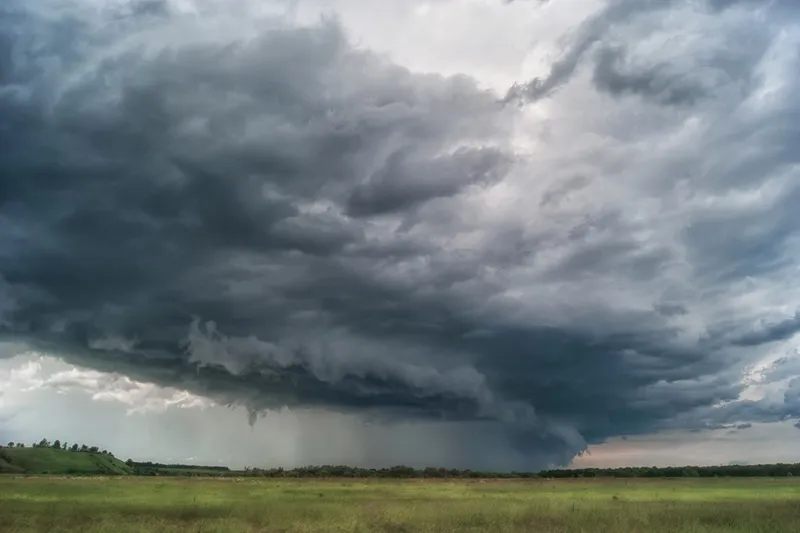
Tennessee summers don't just bring heat and humidity — they bring some of the most destructive weather in the Southeast. From May through September, the state experiences peak severe storm activity including tornadoes, straight-line winds, large hail, and flash flooding. For homeowners, this isn't abstract weather trivia — it's the period when insurance claims spike and unprepared homeowners discover the gaps in their coverage.
Whether you're in Nashville, Knoxville, Chattanooga, or the Tri-Cities, taking 30 minutes to review your homeowners insurance before peak storm season can save you thousands — or prevent a coverage denial when you need your policy most. Here's what every Tennessee homeowner should do heading into summer 2026.
Tennessee's Summer Storm Risk: By the Numbers
Tennessee ranks among the top 10 states nationally for tornado activity. The state averages 25–30 tornadoes per year, with the peak season running from March through June. But summer storms aren't limited to tornadoes — severe thunderstorms with damaging winds (58+ mph) and large hail (1 inch or greater) are far more common and collectively cause more total damage across the state.
In 2025 alone, Tennessee experienced multiple severe weather events that generated billions in combined property damage statewide. The Nashville metro, Middle Tennessee corridor, and the Knoxville-Smoky Mountain region were all impacted. Insurance industry data shows that wind and hail claims account for approximately 40% of all homeowners insurance claims in Tennessee — more than any other single category.
Flash flooding is the other summer risk that catches homeowners off guard. Tennessee's terrain — mountains in the east, rolling hills in the middle, and river valleys throughout — creates conditions where heavy rainfall can produce dangerous flooding within minutes. And here's the critical insurance fact: standard homeowners insurance does not cover flood damage. Period.
Step 1: Review Your Wind and Hail Deductible
This is the single most important thing Tennessee homeowners should check before summer. Many insurers have shifted from flat dollar deductibles ($1,000 or $2,500) to percentage-based wind/hail deductibles — and the difference in your out-of-pocket cost can be staggering.
How percentage deductibles work: A 2% wind/hail deductible on a policy with $300,000 in dwelling coverage means you pay the first $6,000 of any wind or hail claim out of pocket. On a $500,000 dwelling policy, that jumps to $10,000. Compare that to a flat $2,500 deductible — the difference is enormous and often surprises homeowners when they file their first storm claim.
Action step: Call your insurance agent or review your declarations page. Look specifically for "wind/hail deductible" or "named storm deductible." If you have a percentage-based deductible higher than 1%, ask about switching to a flat dollar deductible. The premium increase is often modest compared to the reduced out-of-pocket risk.
Step 2: Verify Your Dwelling Coverage Is Current
Construction costs have increased 25–35% nationally since 2020 due to lumber prices, labor shortages, and material inflation. If your dwelling coverage hasn't been updated in the past two years, you may be significantly underinsured. This means that even if your claim is approved, the payout may not cover the actual cost to repair or rebuild your home.
The 80% rule: Most homeowners policies include a co-insurance clause requiring you to insure your home for at least 80% of its replacement cost. If your coverage falls below this threshold, the insurer can reduce your claim payout proportionally — even if the claim amount is well within your policy limits. For example, if your home's replacement cost is $400,000 but you only carry $280,000 in dwelling coverage (70%), the insurer could reduce a $50,000 claim to $43,750.
Action step: Request a replacement cost estimate from your insurer or an independent appraiser. Compare it to your current Coverage A (dwelling) limit. If there's a gap, increase your coverage before storm season hits — not after.
Step 3: Document Everything Before a Storm
The best time to document your home's condition is before damage occurs. Post-storm claims are exponentially easier to process when you have pre-existing documentation.
Create a home inventory:
- Walk through every room with your phone's camera recording video. Open closets, cabinets, and drawers. Narrate as you go — "master bedroom, king bed frame, Restoration Hardware dresser, 55-inch Samsung TV."
- Photograph your roof, siding, windows, and outdoor structures from multiple angles.
- Save receipts and serial numbers for high-value items (electronics, appliances, jewelry, art).
- Store this documentation in the cloud (Google Drive, iCloud, Dropbox) — not just on a device that could be damaged in the same storm.
Why this matters: After a major storm, adjusters are processing hundreds of claims simultaneously. A homeowner who can provide before-and-after photos, a detailed inventory, and receipts for damaged items will typically receive a faster and more accurate settlement than one relying on memory alone.
Step 4: Understand What Your Policy Does and Doesn't Cover
Tennessee homeowners are often surprised by what standard policies exclude. Here's a quick reference:
Typically covered:
- Wind damage (including tornado)
- Hail damage to roof, siding, and exterior
- Lightning strikes
- Falling trees and debris
- Fire (including fire caused by lightning)
- Water damage from sudden internal events (burst pipe, appliance failure)
Typically NOT covered (requires separate policy or endorsement):
- Flood damage (requires NFIP or private flood policy)
- Sewer and drain backup (requires endorsement, $50–$150/year)
- Earth movement (landslide, sinkhole, earthquake)
- Gradual water damage (slow leaks, seepage over time)
- Mold (often limited or excluded; may require endorsement)
- Power surge damage from utility outage (may require equipment breakdown endorsement)
Step 5: Consider Flood Insurance — Even if You're Not in a Flood Zone
Here's a statistic that surprises most homeowners: approximately 25% of flood insurance claims come from properties outside high-risk flood zones. Tennessee's summer thunderstorms can dump 3–5 inches of rain in under an hour, overwhelming drainage systems and creating flash flooding in areas that rarely see standing water.
National Flood Insurance Program (NFIP) policies are available to any homeowner in a participating community — and most Tennessee communities participate. Premiums for properties outside high-risk zones (Zone X) are often $300–$700 per year under NFIP's Preferred Risk Policy. Private flood insurers may offer competitive alternatives with higher coverage limits and faster claims processing.
If your home has a basement, sits near any waterway (even a small creek), or is at the base of a hill, flood insurance is worth serious consideration.
Step 6: Prepare Your Property Physically
Insurance covers damage, but prevention is always cheaper than a claim. Before summer storm season:
- Inspect your roof: Look for loose, cracked, or missing shingles. A compromised roof lets wind-driven rain into your attic and walls, compounding damage exponentially.
- Trim trees near your home: Dead branches and trees within falling distance of your structure are the #1 preventable cause of storm damage to homes.
- Clean gutters and downspouts: Clogged drainage sends water where it shouldn't go — into your foundation, basement, and walls.
- Secure outdoor furniture and equipment: High winds turn patio furniture, grills, and trampolines into projectiles.
- Test your sump pump: If you have a basement, verify your sump pump is working before you need it. Consider a battery backup system ($200–$500) for power outages during storms.
- Review your emergency kit: Flashlights, batteries, water, first aid, important documents — the basics that matter when a storm hits.
Step 7: Know Your Claims Process Before You Need It
Don't wait until you're standing in a damaged home to figure out how to file a claim. Before storm season:
- Save your insurance company's claims phone number in your contacts.
- Download your insurer's mobile app — most allow photo documentation and claim filing from your phone.
- Know your policy number by heart or have it saved digitally.
- Understand your deductible amounts (both standard and wind/hail).
- Keep your agent's direct contact information accessible — in a major event, direct lines are faster than call centers.
For a comprehensive summer storm preparation review of your homeowners insurance, contact All Seasons Insurance Group at (865) 263-1400. Their Tennessee-based team can review your current policy, identify coverage gaps, and make sure you're protected before the next storm hits — not after.
Frequently Asked Questions
Does homeowners insurance cover tornado damage in Tennessee?
Yes. Standard homeowners insurance covers wind damage, including damage from tornadoes. However, pay attention to your wind/hail deductible — some Tennessee policies use percentage-based deductibles that can result in significant out-of-pocket costs. A 2% deductible on a $400,000 dwelling policy means $8,000 out of pocket before coverage kicks in.
Do I need flood insurance if I'm not in a flood zone?
While not legally required outside high-risk zones, approximately 25% of flood claims come from low-to-moderate risk areas. Tennessee's summer storms can produce flash flooding anywhere. NFIP Preferred Risk Policies for low-risk areas cost $300–$700 per year — affordable protection against an uncovered loss.
What should I do immediately after storm damage to my home?
First, ensure everyone's safety. Then: document damage with photos and video before making temporary repairs. Make only necessary emergency repairs to prevent further damage (tarp a roof, board broken windows). Save all receipts for emergency work. Contact your insurance company within 24 hours. Do not make permanent repairs until an adjuster has inspected the damage.
How long does a homeowners insurance claim take in Tennessee?
Standard claims (minor wind or hail damage) typically settle within 2–4 weeks. Major claims involving significant structural damage can take 4–12 weeks. After widespread storm events, timelines extend further due to adjuster volume. Having thorough documentation and a responsive agent significantly speeds the process.
Can filing a storm claim raise my homeowners insurance rates?
Possibly. While Tennessee law doesn't specifically prohibit rate increases after claims, insurers can factor claims history into renewal pricing. Weather-related claims are generally viewed more favorably than liability or negligence claims. If you have a claims-free discount, filing a claim may remove that discount. Discuss the cost-benefit of filing smaller claims with your agent before proceeding.