Tennessee is a beautiful place to live — and it's also a state that experiences nearly every type of natural disaster except hurricanes. Tornadoes ripped through Middle Tennessee in 2020 and again in 2023. The Gatlinburg wildfire of 2016 destroyed over 2,400 structures. East Tennessee sits in the New Madrid seismic zone's shadow. And flooding is a perennial risk from the Mississippi to the mountains.
Most Tennessee homeowners assume their insurance policy covers them. Many are wrong.
Standard homeowners insurance (HO-3 policies) covers some natural disasters but explicitly excludes others — and the exclusions are exactly the events most likely to cause catastrophic damage. In 2026, with insurance rates rising 10–15% nationally and Tennessee-specific risks intensifying, understanding what your policy actually covers has never been more important.
What Standard Homeowners Insurance Covers
An HO-3 homeowners policy in Tennessee — the most common type — is an "open perils" policy for the dwelling and a "named perils" policy for personal property. For natural disasters, here's what standard policies typically cover:
Wind and Tornadoes — Covered (With Caveats)
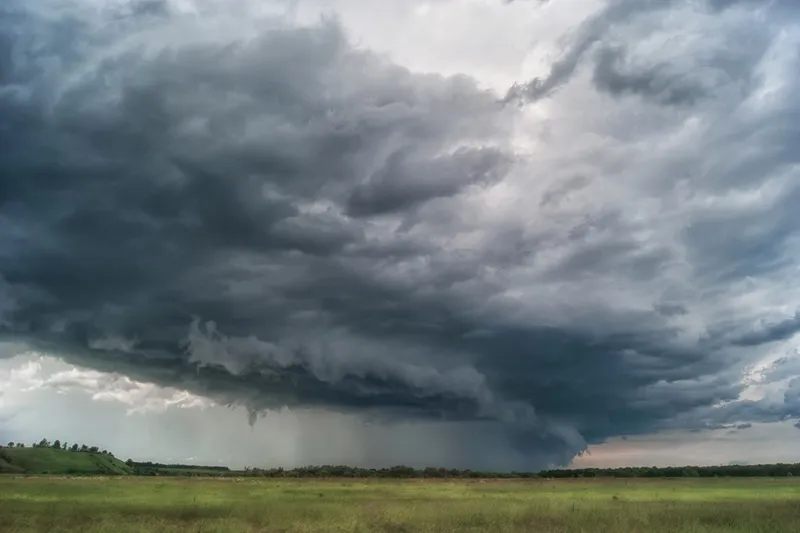
Tennessee averages approximately 25–35 tornadoes per year, ranking it among the top 10 states for tornado frequency. Wind damage from tornadoes, straight-line winds, and severe thunderstorms is covered under standard homeowners policies.
The caveat: Many Tennessee policies now include a separate wind/hail deductible — typically 1–2% of the dwelling coverage amount. On a $400,000 dwelling policy, that's a $4,000–$8,000 deductible for wind/hail claims, compared to the standard $1,000–$2,500 deductible for other perils. Check your declarations page carefully. If you have a percentage-based wind/hail deductible, understand that you're self-insuring thousands of dollars before coverage kicks in.
Hail Damage — Covered (With Limitations)
Tennessee experiences an average of 1,000+ hail events annually, with the Nashville basin and the I-40 corridor through Knoxville being particularly active. Hail damage to roofing, siding, gutters, and vehicles is the most common weather-related insurance claim in the state.
Important limitation: Insurers are increasingly using Actual Cash Value (ACV) for roof claims on homes with roofs older than 10–15 years. ACV deducts depreciation — meaning a 20-year-old roof that costs $15,000 to replace might only pay out $5,000–$8,000 after depreciation. Replacement Cost Value (RCV) policies pay the full replacement cost regardless of age. Know which type you have.
Lightning — Covered
Tennessee ranks in the top 10 states for lightning strikes, with East Tennessee being particularly active during summer thunderstorm season. Lightning damage to the home structure, electrical systems, and electronics is covered under standard policies. Whole-house surge protectors ($200–$500 installed) can prevent the damage in the first place and may qualify for insurance discounts.
Wildfire — Generally Covered
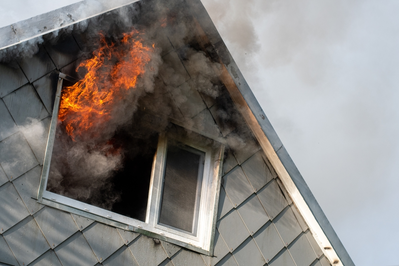
Fire damage from any source — including wildfire — is covered under standard homeowners policies. This became critically relevant for East Tennessee after the 2016 Gatlinburg wildfire, which caused over $500 million in damage and destroyed 2,400+ structures. Homeowners in the Smokies, foothills, and any wooded area should ensure their dwelling coverage reflects current replacement costs, as construction prices have risen 30–40% since 2016.
What Standard Policies Do NOT Cover
These are the exclusions that catch Tennessee homeowners off guard — and they're the events most likely to cause total or near-total loss:
Flooding — NOT Covered
This is the most dangerous gap in Tennessee homeowners insurance. Flooding is explicitly excluded from every standard HO-3 policy in the state. No exceptions.
Tennessee's flood risk is significant:
- The state has over 19,000 miles of rivers and streams
- Nashville experienced catastrophic flooding in 2010 ($2 billion in damage) and again in 2021
- East Tennessee's mountainous terrain creates flash flood risk in valleys and hollows
- Approximately 25% of flood claims nationally come from properties outside FEMA-designated high-risk zones
Flood insurance must be purchased separately, either through the National Flood Insurance Program (NFIP) or a private carrier. NFIP policies cost approximately $700–$1,500/year for high-risk zones and $400–$600/year for moderate-to-low-risk zones. Private flood insurance can sometimes offer better rates and higher coverage limits.
Critical timing note: NFIP policies have a 30-day waiting period before they take effect. You cannot buy flood insurance during a storm warning and expect to be covered. Buy it now, especially if you're in East Tennessee where spring flash floods peak in April and May.
Earthquake — NOT Covered
Tennessee sits within the influence zone of the New Madrid Seismic Zone — one of the most significant earthquake risks east of the Rocky Mountains. The 1811–1812 New Madrid earthquakes were among the most powerful in recorded North American history, and geologists estimate a 25–40% probability of a magnitude 6.0+ earthquake in the region within the next 50 years.
West Tennessee (Memphis area) faces the highest risk, but East Tennessee has its own seismic activity along the Eastern Tennessee Seismic Zone. Minor earthquakes (magnitude 2.0–3.5) occur regularly in East Tennessee, and the USGS maps the Knoxville-to-Chattanooga corridor as having moderate seismic risk.
Earthquake insurance is available as an endorsement or a separate policy, typically costing $100–$500/year in Tennessee depending on location, soil type, and construction. Given the relatively low cost, it's worth considering for any Tennessee homeowner — especially those with older homes that weren't built to seismic standards.
Landslide and Mudslide — NOT Covered
East Tennessee's mountainous terrain creates landslide risk, particularly in the Smokies and along steep hillsides in Knoxville, Chattanooga, and the Tri-Cities. Standard homeowners policies exclude earth movement of all types — landslides, mudslides, sinkholes, and land subsidence. If your property is on a slope or below a hillside, discuss supplemental coverage options with your agent.
How to Close the Coverage Gaps
A comprehensive disaster protection plan for a Tennessee home in 2026 should include:
- Standard HO-3 policy with Replacement Cost Value (RCV): Ensure your dwelling coverage reflects current construction costs, not what you paid for the home or what it would sell for. Construction costs in Tennessee have risen significantly since 2020.
- Flood insurance (NFIP or private): Even outside high-risk zones. The 30-day waiting period means you need to purchase this before storm season — not during it.
- Sewer backup endorsement: $50–$150/year. Covers damage from sewer and drain backups, which standard policies exclude.
- Earthquake endorsement: $100–$500/year. Given Tennessee's seismic risk profile, this is inexpensive protection against a potentially catastrophic loss.
- Extended replacement cost endorsement: Pays 25–50% above your dwelling coverage limit if construction costs spike after a widespread disaster (when every contractor in the area is booked).
- Review wind/hail deductible: If you have a percentage-based deductible, understand the out-of-pocket exposure. Consider switching to a flat-dollar deductible if the premium difference is manageable.
An independent insurance agent who knows Tennessee's risk landscape — like All Seasons Insurance Group — can build a comprehensive policy stack that addresses all of these gaps. One conversation with someone who understands Knox County's hail patterns, Sevier County's wildfire risk, or Davidson County's flood history is worth more than hours of online research. Call (865) 263-1400 for a Tennessee-specific review.
What to Do After a Natural Disaster
If your Tennessee home suffers disaster damage:
- Document everything immediately: Take photos and video of all damage before any cleanup or temporary repairs. This is your evidence for the claims process.
- Make emergency repairs only: Prevent further damage (tarp the roof, board windows, shut off water) but don't begin full repairs until the adjuster inspects.
- Contact your insurer within 24 hours: Start the claims process immediately. Delays can complicate your claim.
- Keep receipts for everything: Temporary housing, emergency repairs, meals, storage — all covered under loss of use if your home is uninhabitable.
- Get your own estimate: The insurer's adjuster works for the insurer. Getting an independent estimate from a licensed contractor ensures you're advocating for the full cost of repairs.
Frequently Asked Questions About TN Insurance and Natural Disasters
Does homeowners insurance cover tornado damage in Tennessee?
Yes. Wind damage from tornadoes is covered under standard HO-3 homeowners policies in Tennessee. However, many policies now include a separate wind/hail deductible of 1–2% of the dwelling coverage, which can mean $4,000–$8,000 out of pocket before coverage applies.
Is flood insurance required in Tennessee?
Flood insurance is required only if your property is in a FEMA-designated high-risk flood zone and you have a federally backed mortgage. However, it's strongly recommended for all Tennessee homeowners because standard policies exclude all flood damage and 25% of flood claims come from outside high-risk zones.
Does homeowners insurance cover earthquake damage in Tennessee?
No. Standard homeowners policies in Tennessee exclude earthquake damage. Earthquake endorsements or separate policies are available for $100–$500 per year and are recommended given Tennessee's proximity to the New Madrid and Eastern Tennessee seismic zones.
How much does flood insurance cost in Tennessee?
NFIP flood insurance in Tennessee ranges from $400–$600 per year for moderate-to-low-risk zones to $700–$1,500 per year for high-risk zones. Private flood insurance may offer different rates and higher coverage limits. There's a 30-day waiting period before NFIP policies take effect.
What should I do if my home is damaged by a natural disaster?
Document all damage with photos and video immediately. Make only emergency repairs to prevent further damage. Contact your insurance company within 24 hours. Keep all receipts for temporary housing and repairs. Consider getting an independent contractor estimate in addition to the insurer's adjustment.