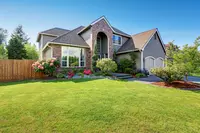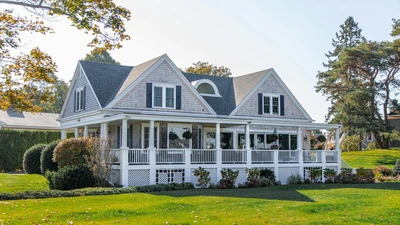
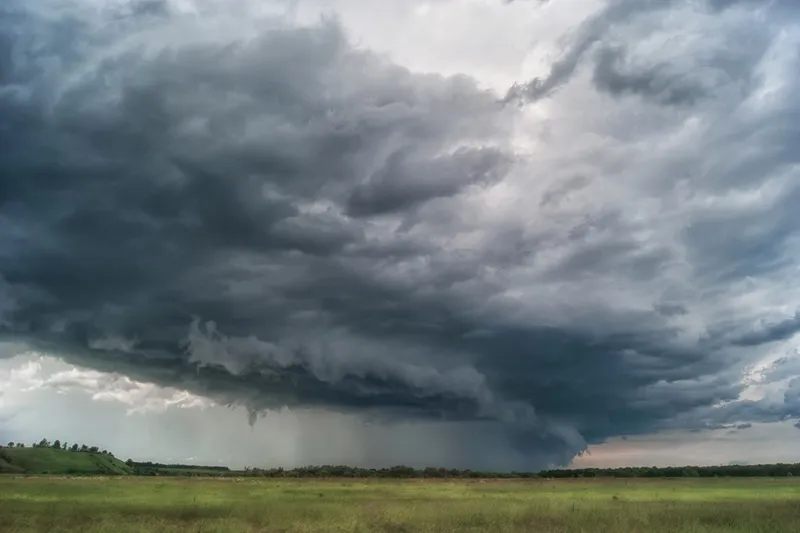
Tennessee's weather isn't just a conversation topic — it's the single biggest factor determining what you pay for homeowners insurance. The state ranks in the top 15 nationally for severe weather events, and the insurance industry tracks every storm, hail event, tornado, and flood to price your risk accordingly. If your premiums went up this year and you haven't filed a claim, Tennessee's weather is almost certainly why.
Understanding the connection between weather patterns and insurance pricing gives you the power to make smarter decisions about your coverage, your deductibles, and even your home improvements. Here's what East Tennessee homeowners need to know in 2026.
Tennessee's Severe Weather Profile: By the Numbers
Tennessee's geographic position — bordered by eight states, spanning from the Appalachian Mountains to the Mississippi River — creates a weather environment that's as diverse as it is active:
- Annual severe weather events: Tennessee averages 60+ severe thunderstorm days per year, concentrated from March through September
- Tornadoes: The state averages 30–40 tornadoes annually, making it one of the most tornado-active states east of the Mississippi. The Tri-Cities and Knoxville areas see fewer tornadoes than Middle and West Tennessee, but damaging straight-line winds are common.
- Hail: Tennessee records an average of 200+ hail events per year, with April through June being the peak season. Hail is the #1 cause of homeowners insurance claims in East Tennessee.
- Annual precipitation: East Tennessee receives 48–54 inches of rain annually, well above the national average of 38 inches. In the Smoky Mountains, totals can exceed 80 inches at higher elevations.
- Ice storms: Northeast Tennessee (Bristol, Johnson City, Kingsport) averages 2–3 significant ice events per winter season, creating downed trees, power outages, and ice dam damage.
- Insured losses: Tennessee's total insured catastrophe losses exceeded $2.8 billion in recent years (Insurance Information Institute), driven primarily by wind, hail, and tornado events.
How Weather Directly Affects Your Premium
Catastrophe Loading
Insurance companies use sophisticated weather models that analyze decades of historical data, climate projections, and building characteristics to predict losses in your specific area. This "catastrophe loading" is built into your premium as a base cost. In Tennessee, catastrophe loading accounts for an estimated 15–25% of your total premium — before any individual factors like claims history or deductible choice.
After a major weather year (like the multiple severe storm events Tennessee experienced recently), insurers adjust their models. This is why premiums can increase even if your home wasn't damaged — the overall loss experience in your region drives rates for everyone.
Loss Ratios by County
Insurers track loss ratios (claims paid vs. premiums collected) at the county level. Counties with higher loss ratios see higher rate increases. In East Tennessee, the breakdown looks roughly like this:
- Knox County: Moderate loss ratios — urban density means more claims per event, but also better emergency response and building standards
- Sevier County: Elevated loss ratios — wildfire risk (the 2016 Gatlinburg fires fundamentally changed how insurers price this area) plus tourist property concentration
- Sullivan County (Bristol area): Moderate — ice storm and wind damage drive most claims
- Blount County: Moderate to low — fewer severe events than Nashville/Middle Tennessee but above-average rainfall
- Washington County (Johnson City): Moderate — severe thunderstorm exposure with occasional tornado risk
Reinsurance Costs
Insurance companies buy their own insurance — called reinsurance — to protect against catastrophic losses. Tennessee's weather volatility means reinsurance for Tennessee carriers is expensive, and that cost is passed through to policyholders. After high-loss years, reinsurance renewals can drive 5–10% premium increases across the board, even in counties that weren't directly affected.
The Hail Factor: East Tennessee's Most Expensive Weather Event
Hail causes more homeowners insurance claims in Tennessee than any other weather event — and it's not close. Here's why hail matters so much to your premium:
Roof Damage Claims
A single hail storm can generate thousands of roof damage claims in a single county. The average Tennessee hail claim is approximately $12,000–$15,000, primarily for roof replacement. When you multiply that by thousands of affected homes, a single spring storm can create $50–$100 million in insured losses across East Tennessee.
Roof Age and Your Premium
Insurers have responded by tying premiums directly to roof condition:
- Roof under 5 years old: Best available rates, replacement cost coverage standard
- Roof 5–10 years old: Standard rates, replacement cost coverage usually available
- Roof 10–15 years old: Higher rates, some carriers switch to ACV (actual cash value) coverage
- Roof over 15 years old: Significantly higher rates, many carriers require ACV coverage or may decline to renew
Impact-resistant roofing materials (Class 3 or Class 4) can earn 10–28% premium discounts in Tennessee, depending on the carrier. Metal roofs, impact-resistant shingles, and synthetic slate all qualify. The upfront cost is 15–30% more than standard shingles, but the insurance savings over a 25-year roof life often exceed the additional investment.
Wind Damage: The Silent Premium Driver
While tornadoes get the headlines, straight-line winds cause more total damage in East Tennessee than tornadoes do. Severe thunderstorm winds (58+ mph) can tear shingles, collapse fences, down trees, and damage siding. Unlike tornadoes, which affect narrow paths, straight-line winds can damage hundreds of homes across a wide area in a single event.
Insurers respond with:
- Wind/hail deductibles: Many Tennessee policies now have a separate, higher deductible (1–2% of dwelling value) specifically for wind and hail claims. On a $300,000 home, a 2% wind/hail deductible means you pay the first $6,000 before insurance kicks in.
- Fortified Home discounts: Homes built or retrofitted to IBHS FORTIFIED standards — which include enhanced roof connections, sealed roof decks, and impact-resistant windows — receive premium discounts of 15–40% in some Tennessee markets.
What You Can Do to Control Your Weather-Driven Premiums
1. Invest in Your Roof
Your roof is the single biggest factor in your premium after location. Replacing an aging roof with impact-resistant materials (Class 4 shingles or standing-seam metal) can reduce your annual premium by $200–$600/year while also getting you back to replacement cost coverage. Over 25 years, that's $5,000–$15,000 in premium savings — on top of the roof's protective value.
2. Upgrade Storm Protection
Impact-resistant windows and doors, reinforced garage doors, and hurricane clips/straps on roof-to-wall connections all reduce wind damage risk. Tennessee insurers offer credits for these improvements, and they genuinely reduce the likelihood and severity of storm damage.
3. Maintain Trees and Landscaping
Dead trees, overhanging branches, and unmaintained landscaping are liability magnifiers during storms. Removing dead trees within falling distance of your home costs $500–$2,000 but can prevent $20,000+ in damage during an ice storm or high-wind event. Some insurers specifically ask about tree proximity during underwriting.
4. Choose Your Deductible Strategically
A higher all-perils deductible ($2,500 vs. $1,000) can save 10–15% on your annual premium. If your home doesn't typically sustain weather damage, the savings over 5–10 years often exceed the higher out-of-pocket cost if you do eventually file a claim. But make sure you can afford the deductible if a loss occurs — don't choose a deductible you can't cover.
5. Bundle and Shop Annually
After severe weather years, some carriers raise rates dramatically while others absorb losses differently. Working with an independent agent like All Seasons Insurance Group lets you compare multiple carriers annually and move to the best combination of price and coverage. Bundling home and auto (and umbrella) typically saves 10–20% versus separate policies.
6. File Claims Strategically
Filing multiple small claims — especially for hail and wind damage under $5,000 — can trigger premium increases of 15–25% and may lead to non-renewal. For smaller weather damage, weigh the claim payout against the potential multi-year premium increase. Your agent can help you calculate whether filing makes financial sense for your specific situation.
Looking Ahead: Climate Trends and Tennessee Insurance
Insurance pricing is forward-looking, and the trends for Tennessee are significant:
- Severe thunderstorm frequency is projected to increase in the Southeast, including Tennessee, over the next decade
- Hail intensity appears to be increasing, with larger hailstones recorded more frequently
- Flash flooding risk is growing as precipitation events become more intense (more rain in shorter periods)
- Winter storm patterns are becoming less predictable, with ice events occurring outside traditional windows
These trends mean Tennessee homeowners insurance premiums are likely to continue rising, even in years with below-average weather events. Proactive mitigation — better roofs, storm-resistant construction, strategic deductibles — is the most effective long-term strategy for controlling your costs.
At All Seasons Insurance Group, we help East Tennessee homeowners understand exactly what's driving their premium and find the most cost-effective coverage for their specific risk profile. Call (865) 263-1400 or visit asigtn.com for a free policy review.
Frequently Asked Questions
Why did my Tennessee homeowners insurance go up even though I didn't file a claim?
Insurance premiums reflect regional risk, not just individual claims history. If Tennessee experienced severe weather events in your area, all policyholders share the increased cost through higher catastrophe loading and reinsurance charges. Your premium is based on the probability of future losses in your zip code, not just your personal claims record.
Does a new roof lower home insurance in Tennessee?
Yes. A new roof — especially impact-resistant materials (Class 3 or 4 shingles, metal roofing) — can lower your premium by $200–$600 per year. Newer roofs also qualify for replacement cost coverage rather than actual cash value, which means you get the full cost of a new roof if damage occurs rather than a depreciated payout.
What is a wind/hail deductible in Tennessee?
Many Tennessee homeowners policies include a separate deductible for wind and hail claims, typically 1–2% of your dwelling coverage amount. On a $300,000 home, a 2% wind/hail deductible means you pay the first $6,000 of any wind or hail claim. This is separate from your standard all-perils deductible and specifically applies to weather-related damage.
Is Tennessee a high-risk state for homeowners insurance?
Tennessee is considered moderate-to-high risk for homeowners insurance due to its exposure to tornadoes, severe thunderstorms, hail, flooding, and ice storms. Average premiums are above the national median but below the highest-risk states (Florida, Louisiana, Oklahoma). East Tennessee generally has lower premiums than Middle and West Tennessee due to fewer tornado events, though mountain weather and wildfire risk add complexity.
How can I find cheaper homeowners insurance in Tennessee?
Work with an independent insurance agent who represents multiple carriers. Maintain a good roof, choose appropriate deductibles, bundle home and auto policies, install storm-resistant features, and avoid filing small claims that could trigger surcharges. All Seasons Insurance Group compares rates across a dozen+ carriers to find the best combination of coverage and price for East Tennessee homeowners.
About the Author
All Seasons Insurance Group is a locally owned, independent insurance agency proudly serving Tennessee families and businesses since 2021. Founded by Tannor Giles and Preston Stewart, our licensed team is committed to finding the best coverage at competitive rates — because as an independent agency, we shop multiple carriers on your behalf to get you the right policy, not just the cheapest one.
With offices in Sevierville (1001 Parkway) and Knoxville (121 Suburban Rd), we specialize in home, auto, business, farm, renters, and investment property insurance across East Tennessee — from the Smoky Mountains to Nashville.
Ready to review your coverage? Call us at (865) 263-1400 or get a free quote online.
Seasons change. So should your coverage.