
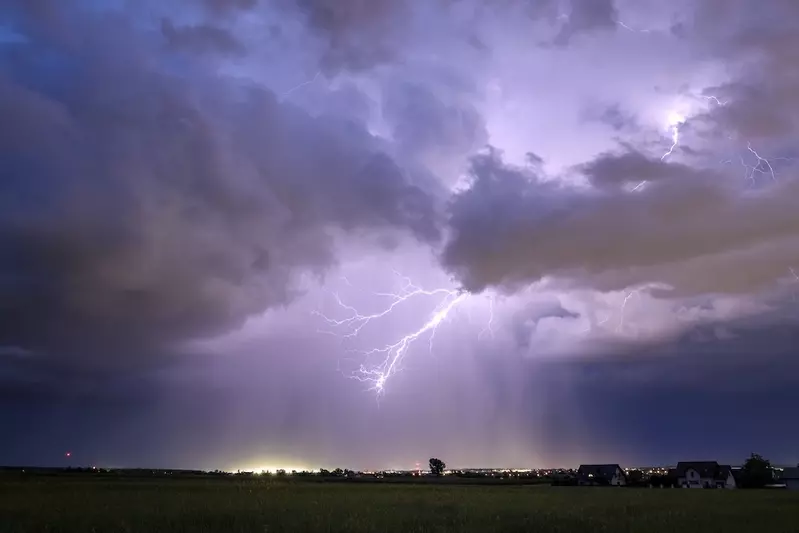
A National Weather Service investigation into the July 28, 2026 storms did not find evidence of a tornado in Greene County, according to a July 30 update, though crews were still sorting through additional evidence there and in Blount County. Initial review of images and radar pointed to straight-line winds from the destructive thunderstorms. In Blount County the storm produced "highly visual rotating funnel clouds" near Happy Valley Road, but no tornado path had been determined. Survey crews worked Camp Creek in Greene County on July 29; the mountainous terrain made ground assessment extremely difficult, and satellite data was being collected to read debris patterns.
The day before, on July 29, a severe thunderstorm crossed Cocke County with radar-indicated 60 mph gusts and nickel-sized hail, with the National Weather Service in Morristown flagging Parrottsville, Caney Branch, Round Mountain, Del Rio, Cedar Creek, Max Patch and I-40 near mile marker 439 for roof, siding and tree damage.
Does it matter whether it was a tornado or straight-line wind?
For your standard Tennessee homeowners policy, usually no — windstorm is windstorm, and both are covered perils. What it can change is which deductible applies. A growing number of carriers write separate wind/hail deductibles as a percentage of dwelling coverage rather than a flat dollar amount. On a $450,000 home, a 2% wind/hail deductible is $9,000 out of pocket, not the $1,000 you assumed. Check your declarations page before you need it.
How do you tell wind damage from tornado damage?
The NWS notes people routinely confuse the two. Straight-line wind debris lies flat and in one direction, matching the wind flow. Tornado debris lies at varying angles because wind hit from all sides. Straight-line winds can exceed 165 mph; tornado winds range from 40 to over 300 mph. Both roar. Trees can be "twisted off" by straight-line winds, which is why homeowners often assume a tornado came through.
What should you do in the first 72 hours after storm damage?
- Photograph everything before cleanup — roof, siding, fences, vehicles, interior water stains, and the debris direction itself.
- Make reasonable temporary repairs (tarp the roof, board a window) and keep receipts. Policies require you to prevent further damage.
- Report promptly — late notice is one of the most common reasons a legitimate claim gets reduced.
- Get your own contractor estimate in addition to the adjuster's scope.
- Be careful with door-knocking roofers after a named storm event. Verify licensing and never sign an assignment of benefits without reading it.
What East Tennessee homeowners should check right now
| Policy item | What to verify |
|---|---|
| Wind/hail deductible | Flat dollar or a % of dwelling? Do the math on your actual coverage amount. |
| Roof settlement basis | Replacement cost or actual cash value? ACV on a 15-year roof can cut a payout in half. |
| Dwelling limit | Construction costs have moved. An underinsured limit triggers coinsurance penalties. |
| Tree and debris removal | Often sub-limited to $500–$1,000. Mountain lots need more. |
| Loss of use | Covers a rental if the home is unlivable. Confirm the limit and time cap. |
Greene, Blount, Cocke, Sevier and Jefferson counties all sit under the same storm corridor. A 20-minute review before renewal is cheaper than discovering a percentage deductible while your roof is under a tarp.
Sources: National Weather Service surveys, July 29–30, 2026 (Knox News, July 30, 2026); Cocke County Emergency Management Agency / NWS Morristown severe thunderstorm warning, July 28, 2026.
Seasons change. So should your coverage.
Get a free East Tennessee coverage review from All Seasons Insurance Group — (865) 263-1400.