
How to File a Homeowners Insurance Claim in Jonesborough TN
Filing a homeowners insurance claim in Jonesborough, Tennessee involves more than calling your insurer. From Nolichucky River flooding to hail-shattered roofs and the unique challenges of the town’s 18th- and 19th-century homes, East Tennessee homeowners face a claims process with specific steps, strict deadlines, and consumer protections worth understanding before disaster strikes.
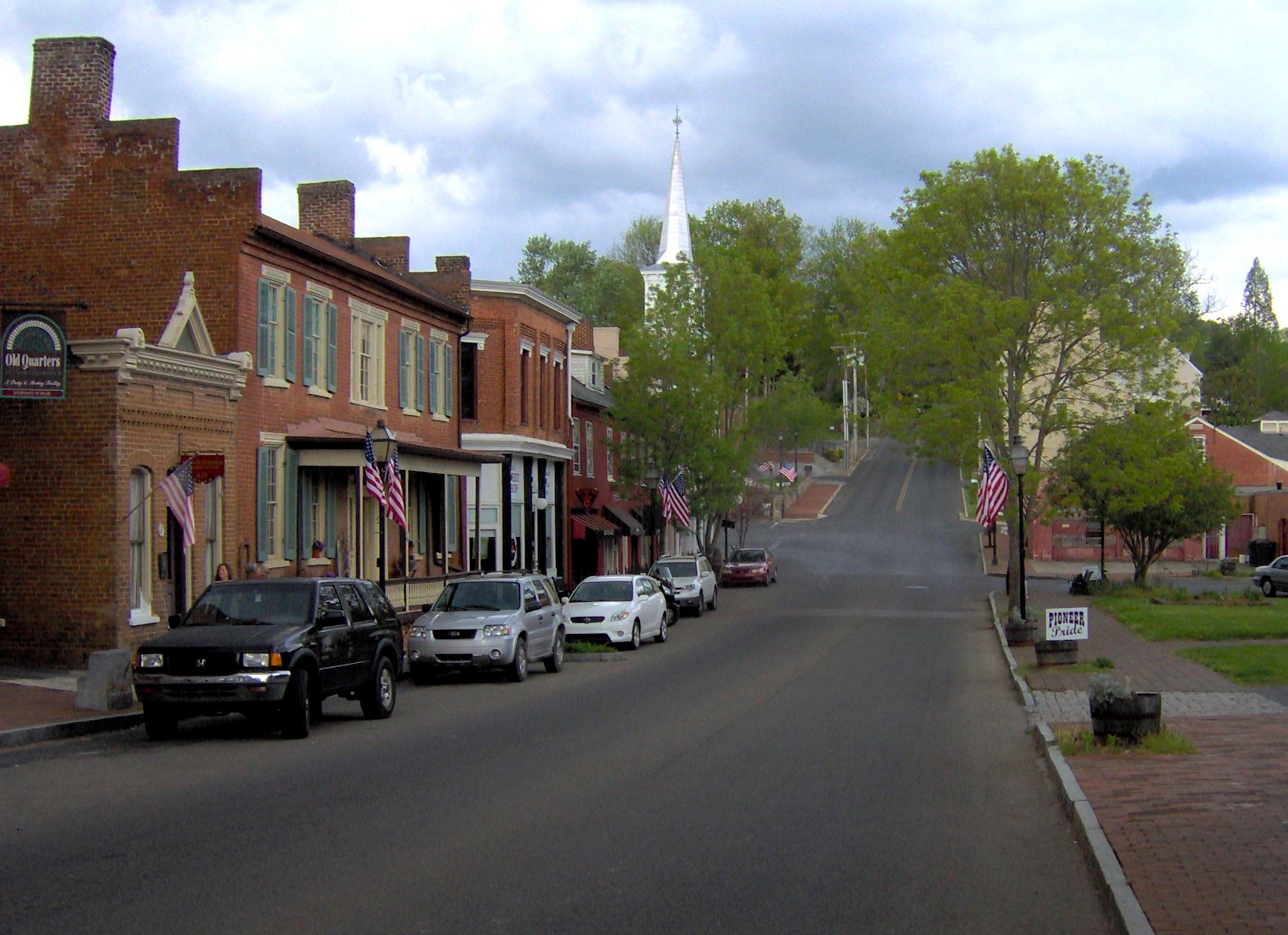
Why Claims in Jonesborough Are Different
Jonesborough is Tennessee’s oldest town, incorporated in 1779, and its Washington County setting places it squarely in the path of some of East Tennessee’s most severe weather. The town sits near the Nolichucky River corridor, which funnels runoff from the Unaka Mountains south of Erwin directly through the county. Severe thunderstorms roll through the Tri-Cities region most spring and summer seasons, and winter ice storms are a recurring feature of Upper East Tennessee winters.
When Hurricane Helene made landfall in September 2024 and tracked inland across the Southern Appalachians, Washington County bore extraordinary damage. Residential losses alone reached nearly $40 million, according to county officials. Four lives were lost in Washington County. The International Storytelling Festival — Jonesborough’s signature annual event that typically draws 10,000 visitors and generates roughly $1.5 million in local economic activity — was canceled. For homeowners, the event was a crash course in what their policies did and did not cover.
Before Helene, a severe hailstorm struck the Mockingbird Place neighborhood in Jonesborough in March 2021, breaking windows, tearing siding, and snapping trees across multiple properties. One resident described winds that “laid into the houses like machine guns.” Both events underscore why understanding the claims process before a loss is essential for every Washington County homeowner.
The Most Common Homeowners Claims in Jonesborough and Washington County
Washington County’s geography and climate produce a predictable set of perils that drive the majority of homeowners insurance claims in the area:
- Wind and hail damage — The most frequent source of roof, siding, and window claims. Severe convective storms track across the valley during spring and summer, and a single storm can produce golf-ball-sized hail across multiple neighborhoods simultaneously.
- Flooding from the Nolichucky River — The Nolichucky drains a large watershed and can rise rapidly after heavy rain. Hurricane Helene demonstrated the worst-case scenario, but even moderate rainfall events produce periodic overflow affecting low-lying properties near Embreeville and the Nolichucky corridor.
- Winter ice storms — Ice accumulation collapses roofs, snaps tree limbs onto structures, freezes and bursts pipes, and damages gutters. Washington County averages multiple significant ice events per decade, each generating a wave of property claims.
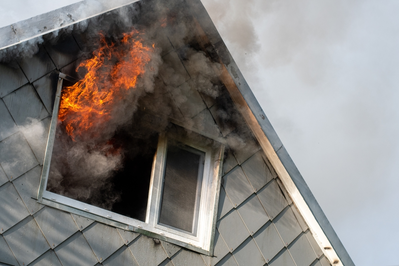
- Fire — A risk in any community, but elevated in older Jonesborough homes with outdated wiring systems and wood-framed construction.
- Fallen trees — The heavily wooded character of the region means wind events routinely send large trees through roofs, porches, and fences.
One important distinction: standard homeowners insurance covers wind, hail, fire, and fallen trees — but it does not cover flood damage. The TDCI is explicit that “damage as the result of a flood” is excluded from standard homeowners policies. If your property sits near the Nolichucky or in a low-lying drainage area, a separate flood insurance policy through the National Flood Insurance Program is essential, and it requires a 30-day waiting period before coverage activates.
Step-by-Step: How to File a Homeowners Insurance Claim in Jonesborough TN
| Step | Action | Key Deadline / Note |
|---|---|---|
| 1 | Ensure the property is safe before entering | Safety first; avoid downed power lines and structural hazards |
| 2 | Document all damage with photos and video before any cleanup | Capture exterior, interior, roof, contents — every room, every angle |
| 3 | Make temporary protective repairs only | Tarp the roof, board windows; keep all receipts for reimbursement |
| 4 | Contact your insurer or agent to report the loss | Have your policy number, date of loss, and damage description ready; notify as soon as reasonably possible |
| 5 | Request all required claim forms | Tennessee law requires the insurer to provide forms within 15 days of your specific request |
| 6 | Prepare and submit a complete proof of loss | Many policies require this within 60 days of the loss; include itemized damage list and supporting documentation |
| 7 | Allow the adjuster to inspect before beginning permanent repairs | Permanent repairs before inspection can jeopardize coverage; coordinate the inspection timeline with your insurer |
| 8 | Review the adjuster’s estimate carefully | You may disagree with the scope or valuation; you have the right to request reconsideration or invoke appraisal provisions |
| 9 | Receive acceptance or denial in writing | Tennessee law requires a decision within 60 days of a completed proof of loss |
| 10 | Receive payment on affirmed claim | Payment must be issued within 30 days of affirmed liability under Tennessee law |
Tennessee Claim Timelines and Your Legal Rights
Tennessee does not impose a single statewide deadline for when you must notify your insurer of a loss — that deadline is set by your individual policy. For wind and hail damage specifically, the most common window is one year from the date the storm occurred, and that clock starts on the day of the event, not the day you notice the damage. Some restrictive policies require reporting within 30, 60, or 90 days. Check your declarations page immediately after any loss event, even before you know whether you will file.
Once you report, Tennessee law establishes a clear timeline of obligations for your insurer:
- 30 days — Insurer must acknowledge receipt of your claim (or provide forms and assistance)
- 15 days — Insurer must provide required claim forms if you specifically request them
- 30 days — Insurer must respond to any written communication from you that reasonably suggests a reply is expected
- 60 days — Insurer must accept or deny the claim after receiving a completed proof of loss, or explain why more time is needed
- 30 days — Payment must follow within 30 days of affirmed liability
If your insurer fails any of these obligations, or if you believe a claim was denied unfairly, you have the right to file a complaint with the Tennessee Department of Commerce and Insurance (TDCI) at 1-800-342-4029 or (615) 741-2218. TDCI recovered more than $17.54 million for Tennessee policyholders in 2024 alone through its mediation and restitution programs. That figure reflects how often the process goes wrong — and how much leverage policyholders have when they assert their rights.
Keep in mind that insurance policies can contractually shorten the timeframe to file suit if a claim is disputed — often to as little as one year from the date of loss. The Tennessee Code provides a three-year statute of limitations for injury to property generally, but your policy’s language may override that. An attorney familiar with Tennessee insurance law can advise you if a dispute arises.
Documentation Best Practices for East Tennessee Homeowners
The single most effective thing a Jonesborough homeowner can do to protect a future claim is to create a thorough home inventory before any loss occurs. Walk through every room with your phone and record video, narrating each item — furniture, appliances, electronics, clothing, tools, artwork — as you go. Note brand names, model numbers, and approximate values. Store the recording and any supporting receipts or appraisals in the cloud or at an off-site location so the documentation survives a total loss.
When damage does occur, photograph everything before moving or cleaning anything. Capture wide shots that establish context, then close-ups of specific damage — broken windows, lifted shingles, waterlines on walls, cracked plaster. Record the date and time of each image. The TDCI recommends taking photographs of all damage “for each instance your home or property was damaged,” and advises keeping detailed records of any temporary repair expenses because those costs may be reimbursable under your policy’s mitigation provisions.
After Hurricane Helene, the Tennessee Emergency Management Agency directed homeowners to take pictures before cleanup begins and contact their insurance company immediately — advice that proved difficult to follow when power, cell service, and road access were all disrupted simultaneously. If you live in a flood-prone area, consider printing your insurer’s claims contact number and keeping it with your policy documents in a waterproof location, not just saved in a phone that may be lost or dead.
Historic Homes in Jonesborough: Unique Claims Challenges
Jonesborough is listed on the National Register of Historic Places, and its downtown historic district contains some of the oldest continuously occupied structures in Tennessee. Dozens of private residences in and around town date to the antebellum period or earlier, and many retain original features — hand-hewn timber framing, horsehair plaster walls, wide-plank pine floors, slate or clay-tile roofing, and knob-and-tube or early aluminum branch wiring — that create specific complications when a claim arises.
Replacement Cost vs. Actual Cash Value
A standard homeowners policy that pays actual cash value — original value minus depreciation — will fall far short of what it costs to restore a 19th-century home to its original condition. Horsehair plaster cannot be replicated with drywall and called equivalent. Old-growth heart pine floors are not the same as modern pine. Owners of historic properties should look for guaranteed or extended replacement cost coverage, which commits the insurer to pay whatever restoration actually requires, and ideally specifies that repairs must use historically accurate materials and methods.
Ordinance or Law Coverage
When more than a certain percentage of a home is damaged — often 50 percent — many local codes require demolition of the entire structure and reconstruction to current standards. For a Jonesborough home built in 1850, “current standards” means modern electrical panels, ground-fault circuit interrupters, updated plumbing, and potentially fire-suppression systems. A standard policy pays only to restore what was damaged. Ordinance or law coverage picks up the additional cost of mandatory code upgrades, which can easily exceed tens of thousands of dollars on an older home. It is typically available as an endorsement for 10, 25, or 50 percent of your dwelling limit — and for historic properties, 50 percent is rarely excessive.
Preservation Restrictions and Extended Timelines
Properties within Jonesborough’s historic district may be subject to local preservation guidelines governing what materials and methods can be used in repairs. This can slow the claims process considerably, since the adjuster’s standard repair estimate may reference materials that preservation rules prohibit. Before filing a claim on a historically designated property, confirm with your insurer and your agent whether the policy addresses restoration compliance costs, permit delays, and the extended timelines that skilled historic craftspeople typically require. A claim that would take three months to resolve on a modern subdivision home may take twice as long for a pre-Civil War brick structure.
Knob-and-Tube Wiring and Insurer Scrutiny
Some carriers will not write standard homeowners coverage at all on properties with original knob-and-tube wiring, citing fire risk. For homes where rewiring is cost-prohibitive or restricted by preservation requirements, an HO-8 policy — a specialized form designed for older or high-value homes where reconstruction cost exceeds market value — may be the only available option. HO-8 policies typically provide more limited coverage than standard HO-3 policies, making it especially important to understand exclusions and sub-limits before a loss occurs.
Lessons from Hurricane Helene (2024) for Washington County Homeowners
The September 2024 storm produced flooding along the Nolichucky River that swept away a campground near Jonesborough and damaged or destroyed hundreds of homes across Washington County. County officials estimated residential damage at nearly $40 million. FEMA designated Washington County for Individual Assistance, meaning residents could apply for federal aid — but FEMA rules require homeowners to file an insurance claim first, because FEMA cannot duplicate benefits for losses already covered by insurance.
Several specific lessons emerged for homeowners in the Jonesborough area:
- Flood insurance gaps were exposed. Standard homeowners policies uniformly exclude flood damage, and many homeowners near the Nolichucky discovered this exclusion for the first time when their claims were denied. The TDCI has long warned that “one inch of water in the average-sized home can cause more than $25,000 in damage” — a figure that understates the scale of Helene’s losses.
- Documentation proved difficult in communications blackouts. Cell towers were down, roads were closed, and many homeowners could not immediately reach their insurers. Pre-event documentation — home inventories stored in the cloud — proved far more useful than documentation attempted after the fact.
- Scam contractors arrived quickly. The Tennessee Attorney General’s office warned residents specifically about unlicensed contractors and storm-chasing repair scams following Helene. The TDCI advises hiring only licensed contractors and never paying the total amount before work is completed.
- Additional living expense coverage was often overlooked. Homeowners displaced from uninhabitable properties frequently did not know their policy included coverage for temporary housing and living costs. If your home is uninhabitable after a covered loss, ask your insurer specifically about ALE benefits.
About All Seasons Insurance Group
All Seasons Insurance Group is an independent insurance agency serving East Tennessee homeowners from their Sevierville, Tennessee base. As an independent agency, All Seasons works with multiple carriers — giving homeowners access to coverage options that a single-carrier agent cannot offer. That flexibility matters considerably when insuring the range of properties found across the Tri-Cities region: modern construction in newer subdivisions, older homes in Washington County’s rural townships, and the historic structures that define Jonesborough’s character. Independent agents like those at All Seasons can shop coverage across multiple markets, match policy language to the specific exposures of each property, and advocate for clients through the claims process in ways that call-center representatives at direct insurers typically cannot.
East Tennessee’s real estate market reflects the region’s growing appeal. Local professionals like the team at Kings of Real Estate — one of the most reviewed real estate teams in East Tennessee — regularly work with buyers and sellers throughout the Tri-Cities, including Jonesborough and Washington County. For anyone purchasing or already owning property here, having the right insurance coverage in place before the next storm season is as important as any other piece of the transaction.
Frequently Asked Questions
How long do I have to file a homeowners insurance claim in Tennessee after a storm?
Tennessee does not set a single statutory deadline for filing a homeowners insurance claim — the deadline is controlled by your individual policy. The most common window for wind and hail claims is one year from the date the storm occurred. Some policies allow two years; others require you to report damage within 30 to 90 days. Read your declarations page carefully and contact your agent immediately after any loss to preserve your rights.
Does standard homeowners insurance cover Nolichucky River flooding in Jonesborough?
No. Standard homeowners insurance policies exclude flood damage regardless of its source — including river overflow from the Nolichucky. After Hurricane Helene caused nearly $40 million in residential damage in Washington County in September 2024, many homeowners without separate flood insurance faced the full cost out of pocket. Flood coverage must be purchased separately, typically through the National Flood Insurance Program (NFIP), and requires a 30-day waiting period before it takes effect.
What is ordinance or law coverage and why do Jonesborough historic homeowners need it?
Ordinance or law coverage pays for the cost of bringing your home up to current building codes after a covered loss. For Jonesborough’s many historic homes — some dating to the 1780s — a partial loss can trigger a code requirement to rewire the entire structure, upgrade plumbing, or install modern fire-suppression features. A standard policy only pays to restore what was damaged; ordinance or law coverage fills the gap between that payout and full code compliance, which can amount to tens of thousands of dollars.
How quickly must my insurance company respond to my claim in Tennessee?
Tennessee law requires your insurer to acknowledge your claim within 30 calendar days of receiving notification. If you specifically request claim forms, the company must supply them within 15 days. The insurer must then accept or deny your claim within 60 days of receiving a completed proof of loss. Payment must follow within 30 days of affirmed liability. If any deadline is missed, you have the right to file a complaint with the Tennessee Department of Commerce and Insurance (TDCI) at 1-800-342-4029.
What should I do immediately after my Jonesborough home is damaged?
Prioritize safety, then document everything before cleanup begins. Photograph and video all damage from multiple angles. Make only temporary protective repairs — tarping a roof, boarding broken windows — to prevent further loss, and keep all receipts. Do not begin permanent repairs before your adjuster inspects the property. Notify your insurer as soon as possible with your policy number, date of loss, and a description of the damage. Store documentation copies off-site or in cloud storage so they survive a total loss.
About the Author
All Seasons Insurance Group is a locally owned, independent insurance agency proudly serving Tennessee families and businesses since 2021. Founded by Tannor Giles and Preston Stewart, our licensed team is committed to finding the best coverage at competitive rates — because as an independent agency, we shop multiple carriers on your behalf to get you the right policy, not just the cheapest one.
With offices in Sevierville (1001 Parkway) and Knoxville (121 Suburban Rd), we specialize in home, auto, business, farm, renters, and investment property insurance across East Tennessee — from the Smoky Mountains to Nashville.
Ready to review your coverage? Call us at (865) 263-1400 or get a free quote online.
Seasons change. So should your coverage.