How to File a Homeowners Insurance Claim in Seymour, TN
Filing a homeowners insurance claim in Seymour, Tennessee involves more than just calling your insurer. From the moment a storm rolls off the Smokies to the day the adjuster hands you a settlement check, knowing each step—and your rights under Tennessee law—can mean thousands of dollars in the difference. This guide walks East Tennessee homeowners through the full claims process, from initial documentation to final payment.
Why Seymour Homeowners Face Unique Insurance Challenges
Seymour sits on the border of Sevier and Blount counties along Chapman Highway (US-441), wedged between Bluff Mountain to the southeast and the broad agricultural valley that drains toward the Little Pigeon River system. That geography creates a specific combination of insurance risks that differs from much of Tennessee.
The Great Smoky Mountains funnel and amplify weather. Orographic lift pushes moisture-laden air up the mountain slopes, releasing heavy rainfall events that can exceed three inches in under two hours—enough to cause flash flooding and landslides, as Sevier County experienced as recently as September 2025 when multiple roads were closed simultaneously due to flooding and debris. Standard homeowners insurance does not cover flood damage from runoff or rising water, which means many Seymour homeowners carry coverage gaps they may not discover until they need to file a claim.
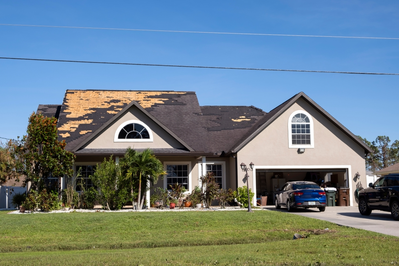
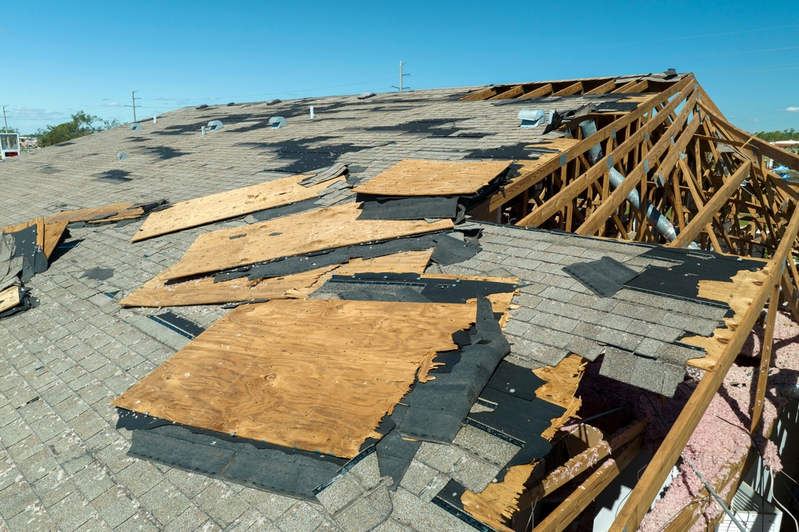
Wind and hail represent the most common covered claims in the region. Severe thunderstorm cells tracking northeast through the Tennessee Valley frequently bring hail of one inch or larger, the threshold at which insurers typically begin accepting claims. According to roofing professionals serving the Knoxville and Sevierville markets, insurers generally look for six to ten hail strikes per 100 square feet across multiple roof surfaces before approving a replacement claim.
Wildfire proximity is also a real concern. The November 2016 Chimney Tops 2 Fire—which originated in Great Smoky Mountains National Park and spread into Gatlinburg on near-hurricane-force winds—destroyed or damaged more than 2,460 structures across Sevier County and resulted in over $943 million in combined estimated losses, with insurers paying out nearly $800 million across 2,866 closed claims. The fire burned more than 17,000 acres and killed 14 people. East Tennessee carriers have responded by tightening underwriting standards for properties in elevated fire-risk zones, particularly in the Wears Valley and Pigeon Forge corridors just northeast of Seymour. Insurance rates across East Tennessee jumped 23% in 2025 alone, and State Farm stopped writing new policies in 47 Tennessee counties as of January 2026.
Step-by-Step: Filing a Homeowners Insurance Claim in Seymour
The claims process follows a predictable sequence, but how well you execute each step has a direct bearing on your settlement amount and timeline.
| Step | Action | Tennessee Deadline / Standard |
|---|---|---|
| 1. Secure the property | Prevent further damage—tarp exposed roofing, board broken windows, shut off water at the main if pipes burst. Save all receipts for emergency materials. | Do immediately; policy requires mitigation of further loss |
| 2. Document everything | Photograph and video all damage from multiple angles with timestamps. Note the date, time, and type of storm. Save any weather alerts from NWS confirming the event. | Within 24–48 hours of damage occurring |
| 3. Notify your insurer | Call, use the online portal, or contact your agent. Provide your policy number and a description of the loss. Ask your insurer to send all necessary claim forms. | As soon as reasonably possible; check policy for specific deadline (often 1 year for wind/hail) |
| 4. Receive claim forms | Your insurer must provide all required forms and instructions within 15 days of your request, or acknowledge the claim within 30 days of notification. | Insurer: 15 days (forms on request) / 30 days (acknowledgment) |
| 5. Get a professional inspection | Have a licensed contractor or public adjuster inspect damage before permanent repairs begin. Their written report and photos strengthen your claim file. | Before permanent repairs; do not start without insurer approval except emergency mitigation |
| 6. Submit proof of loss | Complete the proof of loss form with your inventory list, descriptions, photos, contractor estimates, and receipts. Many policies require this within 60 days of the loss. | Typically 60 days post-loss per policy; verify your specific policy language |
| 7. Cooperate with the adjuster | Allow the insurance company's adjuster to inspect your property. Keep a written log of every call, email, and visit, including the adjuster's name and badge number. | Adjuster inspection should occur promptly after claim is filed |
| 8. Review the settlement offer | Compare the insurer's estimate to your contractor's estimate. Question any line items you do not understand. You have the right to dispute underpayments. | Insurer must accept or deny within 60 days of receiving completed proof of loss |
| 9. Receive payment | Once liability is confirmed, payment must be issued within 30 days. If you have a mortgage, the check may be co-payable to you and your lender. | Insurer: 30 days after affirming liability |
| 10. Complete repairs | Use licensed, insured contractors. If you have replacement cost coverage, submit final repair receipts to receive any withheld recoverable depreciation. | Submit receipts promptly; recoverable depreciation release varies by policy |
What to Document Before You File
Thorough documentation is the single most effective thing a Seymour homeowner can do to protect their claim. Insurance adjusters can only assess what is visible at the time of their inspection—anything you do not document before beginning repairs may be lost from consideration.
For a storm damage claim, gather the following before contacting your insurer:
- Timestamped photos and video of all exterior and interior damage, taken from multiple angles and distances
- A written description of each damaged item, its approximate age, and the cost to repair or replace it
- National Weather Service records confirming the event date, wind speed, and hail size—these are publicly available and provide objective verification
- Receipts for emergency materials such as tarps, plywood, or boarding-up services
- A contractor's written inspection report detailing all damage, even items not immediately visible to an untrained eye
- A claim journal logging every contact with your insurer, including names, dates, and what was discussed
For personal property losses—furniture, appliances, electronics—a home inventory compiled before any loss is invaluable. If you do not have one, begin recreating it using receipts, credit card records, and photos from before the damage occurred.
Common Claims in the Seymour Area
Understanding which losses are most likely—and which are most frequently misunderstood—helps homeowners near the Sevier/Blount County line plan their coverage accordingly.
Wind and hail damage is the leading covered claim type in East Tennessee. Tennessee recorded 87 significant weather events in 2025 alone. Roof damage from hail and wind-driven debris accounts for the majority of residential claims in the Seymour corridor. Hail as small as one inch in diameter can cause claim-worthy bruising to asphalt shingles, and the damage is often not visible from the ground.
Mountain runoff flooding is a serious risk that standard policies do not cover. The terrain around Seymour channels rainfall rapidly downhill. Sevier County's flash flooding history is extensive—the county has experienced repeated road closures, landslides, and stream overflows during heavy rainfall events. The National Flood Insurance Program (NFIP) offers flood coverage separately, and private flood policies are also available. FEMA updated its flood maps in 2025, reclassifying thousands of Tennessee properties previously considered low-risk.
Wildfire smoke and ember damage has become a growing concern since the 2016 Gatlinburg disaster. While Seymour itself was not in the direct fire path, the lesson of that event—in which a fire went from 70 acres to 17,000 acres in hours—demonstrated how quickly wildfire can reach residential areas near the national park. Properties in heavily wooded areas or on ridge lines face elevated underwriting scrutiny and, in some cases, premium surcharges.
Tree and limb damage is frequent given the forested landscape. A fallen tree that damages your home is generally covered under the dwelling portion of your policy. However, removing an intact tree that simply fell in your yard—without hitting a structure—is typically not covered.
Ice and winter weather damage occurs in most East Tennessee winters. Frozen pipes that burst, ice dams on roofs, and collapsed structures from heavy snow loads are typically covered perils, but damage from flooding caused by snowmelt is not covered under a standard policy.
Your Rights Under Tennessee Law
The Tennessee Department of Commerce and Insurance (TDCI) enforces the state's Unfair Claims Settlement Practices Act, which gives policyholders specific, enforceable protections. Understanding these timelines puts you in a stronger position when dealing with a slow-moving insurer.
Under Tennessee insurance regulations (Tenn. Comp. R. & Regs. 0780-01-05):
- Your insurer must acknowledge your claim within 30 days of receiving notification
- All necessary claim forms must be provided within 15 days of your specific request
- The insurer must accept or deny your claim within 60 days of receiving a completed proof of loss
- If more time is needed, the insurer must notify you in writing and update you every 60 days thereafter
- After affirming liability, payment must be made within 30 days
- Any denial must be in writing and cite a specific policy provision
- Insurers cannot request duplicate documentation already contained in the proof of loss
If your insurer fails to pay within 60 days of a valid payment demand and the refusal is not in good faith, you may be entitled to bad faith penalties, attorney's fees, and additional damages under Tennessee law. If you have a dispute you cannot resolve directly, you can file a complaint with TDCI online or call their consumer hotline at 800-342-4029. The TDCI also provides free guidance on policy interpretation and claim disputes at tn.gov.
ACV vs. Replacement Cost: What Your Payout Actually Means
How your policy values a loss determines how much money you actually receive. Tennessee TDCI explains this distinction clearly: Actual Cash Value (ACV) pays you the depreciated value of your property at the time of loss—its age and condition reduce the check. Replacement Cost Value (RCV) pays you what it would cost today to replace the damaged item with one of similar kind and quality, with no deduction for depreciation.
Using the TDCI's own example: a 5-year-old roof that costs $10,000 to replace carries $2,500 in accumulated depreciation ($500/year). Under an ACV policy with a $1,000 deductible, your payout is $6,500—leaving a $4,500 gap. Under an RCV policy, if the same roof costs $11,000 at claim time, your insurer pays $10,000 after your deductible, and you pay nothing extra. Some RCV policies initially pay out ACV and release the remaining depreciation only after you submit repair receipts, so acting promptly on repairs matters.
For East Tennessee homeowners—where roofs face significant weather stress from hail, wind, and ice—RCV coverage is generally worth the higher premium. An ACV payout on a storm-damaged roof can leave you covering thousands of dollars out of pocket when you can least afford it.
When to File a Claim vs. Pay Out of Pocket
Not every loss warrants a claim. Insurers track claims history through the Comprehensive Loss Underwriting Exchange (CLUE), and multiple claims within a short window can trigger premium increases of $200 to $400 annually for several years—or even policy non-renewal. In a market where East Tennessee carriers are already tightening their books, maintaining a clean claims history has real value.
A general framework:
- File a claim when the repair cost meaningfully exceeds your deductible, the loss is clearly covered, and you have not filed another claim in the past two to three years
- Pay out of pocket when the repair cost is close to or below your deductible, you have recent claims on your record, or the damage type is likely excluded (gradual wear, flooding without flood coverage)
- Call your agent first before formally filing when you are uncertain—asking about a claim is not the same as filing one and does not appear on your CLUE report
For a $2,000 repair with a $1,500 deductible, the net insurance payout is $500—and the resulting premium increase over five years could easily exceed $2,000. For a $20,000 storm event, filing is almost always the right decision.
Short-Term Rentals and Cabin Property Claims
Seymour's proximity to Gatlinburg, Pigeon Forge, and the Smokies corridor makes it a natural base for the region's robust vacation rental market. Sevier County is one of the most active short-term rental markets in the country. But the insurance implications of operating a rental property differ significantly from a primary residence—and filing a claim under the wrong policy type can result in denial.
A standard HO-3 homeowners policy is written for owner-occupied primary residences. Most standard policies do not cover losses that occur while the property is being rented commercially. If your cabin or second home is listed on Airbnb, Vrbo, or a similar platform, you need a policy specifically designed for short-term rental use—sometimes called a landlord policy, vacation rental policy, or STR policy. These policies differ from standard homeowners coverage in several important ways:
- Commercial occupancy is covered—losses during guest stays are eligible for claims
- Guest liability is included, protecting you if a guest is injured on the property
- Loss of rental income coverage reimburses you for bookings lost while the property is being repaired after a covered loss
- Wildfire and fire-risk underwriting varies significantly by carrier—Sevier County's fire history has led some insurers to exit the market entirely or add significant surcharges for properties in wooded or elevated areas
Carriers serving the Smokies region—including Berkshire Hathaway, Auto-Owners, and Travelers—offer STR-specific products, though availability in high-fire-risk zip codes has narrowed. If you own a cabin or investment property in this area, working with a local agent familiar with the region's carrier landscape is essential. The team at Kings of Real Estate (Your Home Sold Guaranteed Realty), which operates throughout East Tennessee including Sevier County, often fields questions from buyers and sellers about the insurance implications of purchasing cabins and rental properties in this market—a reminder that the right coverage starts before the transaction closes.
About All Seasons Insurance Group
All Seasons Insurance Group (ASIG) is an independent insurance agency headquartered in Sevierville, Tennessee, serving homeowners, renters, auto policyholders, and businesses across East Tennessee. Since 2021, ASIG has built a reputation as a family-friendly, locally rooted agency committed to providing personalized coverage and fast solutions at competitive rates. The agency operates two locations—1001 Parkway in Sevierville and 121 Suburban Road in Knoxville—and is reachable Monday through Friday, 9 a.m. to 7 p.m., and Saturday, 9 a.m. to 1 p.m. ASIG works with multiple admitted carriers, giving clients access to a range of policy options rather than a single-company solution. For homeowners in Seymour and across the Sevier/Blount County corridor, ASIG offers home insurance tailored to the region's specific risks—including storm, wind, hail, and the elevated wildfire exposure that defines this corner of East Tennessee. Learn more at asigtn.com or call 865-263-1400.
Frequently Asked Questions
How long does a homeowners insurance company have to respond to a claim in Tennessee?
Under Tennessee law, an insurer must acknowledge receipt of your claim within 30 days. Once you submit a completed proof of loss, the insurer has 60 days to accept or deny the claim. If more time is needed, the company must notify you in writing with an explanation and update you every 60 days until a decision is made. After liability is confirmed, payment must be issued within 30 days.
Does standard homeowners insurance cover flooding in Seymour, TN?
No. Standard homeowners insurance policies do not cover flood damage, including runoff flooding common in Seymour's mountainous terrain near Blount and Sevier County. Sevier County has experienced numerous flash flooding events and even landslides during heavy rainfall. Separate flood insurance—either through the National Flood Insurance Program (NFIP) or a private carrier—is required to cover flood-related losses.
Can I use a standard homeowners policy for my Sevier County cabin or short-term rental?
Generally, no. A standard HO-3 homeowners policy is designed for owner-occupied primary residences. If you rent your cabin on Airbnb, Vrbo, or similar platforms, your policy likely excludes guest-related liability and income loss claims. You will need a landlord or short-term rental (STR) policy that covers commercial occupancy, guest liability, and loss of rental income. Carriers serving the Smokies region have become increasingly selective about STR coverage due to wildfire and weather risk.
What is the difference between ACV and replacement cost coverage?
Actual Cash Value (ACV) pays the depreciated value of your damaged property—what it was worth at the time of the loss, not what it costs to replace it today. Replacement Cost Value (RCV) pays the full cost to repair or rebuild with materials of similar kind and quality, with no deduction for age or wear. According to the Tennessee Department of Commerce and Insurance, a 5-year-old roof with a $10,000 replacement cost would pay out just $6,500 under ACV (after $2,500 depreciation and a $1,000 deductible), versus $10,000 under RCV minus the deductible.
When should I pay for repairs out of pocket instead of filing a claim in Tennessee?
Consider paying out of pocket when the repair cost is close to or below your deductible, you have filed another claim within the past three years, or the damage is minor and not covered by your policy. Filing unnecessary claims can trigger premium increases of $200–$400 per year for up to five years, or even policy non-renewal. Save your claims for significant covered losses where the payout meaningfully exceeds your deductible.
About the Author
All Seasons Insurance Group is a locally owned, independent insurance agency proudly serving Tennessee families and businesses since 2021. Founded by Tannor Giles and Preston Stewart, our licensed team is committed to finding the best coverage at competitive rates — because as an independent agency, we shop multiple carriers on your behalf to get you the right policy, not just the cheapest one.
With offices in Sevierville (1001 Parkway) and Knoxville (121 Suburban Rd), we specialize in home, auto, business, farm, renters, and investment property insurance across East Tennessee — from the Smoky Mountains to Nashville.
Ready to review your coverage? Call us at (865) 263-1400 or get a free quote online.
Seasons change. So should your coverage.