
Homeowners Insurance Rates in Johnson City, TN: What East Tennessee Homeowners Need to Know
Johnson City sits at the geographic heart of the Tri-Cities region, tucked into the Great Appalachian Valley of Washington County at roughly 1,700 feet of elevation. That setting delivers four distinct seasons, mountain-influenced weather patterns, and a housing market anchored by a state university, an active medical corridor, and neighborhoods that range from pre-Civil War farmhouses to new construction subdivisions. All of those factors shape what homeowners pay to insure a residence here — and the numbers tell a story that is worth understanding before you buy, renew, or shop for coverage.
Average Homeowners Insurance Rates in Johnson City
Johnson City is consistently one of the most affordable cities in Tennessee for homeowners insurance. The city's combination of lower population density, moderate weather severity compared to West Tennessee, and fewer catastrophic loss events keeps base premiums well below the state mean. Rates vary meaningfully by data source and methodology, but the directional picture is consistent: Johnson City homeowners pay substantially less than the Tennessee statewide average.
According to The Zebra, the average homeowners insurance policy in Johnson City costs approximately $1,432 per year — roughly $601 below the Tennessee statewide average of $2,033. NerdWallet places the Johnson City average at $3,270 per year for a policy with $400,000 in dwelling coverage, compared to a Tennessee statewide average of $4,220 for the same coverage level. The spread between sources reflects different benchmark coverage amounts, risk profiles, and carrier mixes used in each analysis — the key takeaway is that Johnson City consistently ranks among the most affordable markets in the state.
For context, the national average homeowners insurance premium runs approximately $2,490 per year for $400,000 in dwelling coverage, according to NerdWallet, while the Consumer Federation of America reported a typical U.S. homeowner paid $3,303 per year in 2024, following a 24% increase in premiums over the prior three years.
Johnson City vs. Tennessee and National Averages
| Geography | Annual Premium (est.) | Monthly Premium (est.) | Coverage Basis |
|---|---|---|---|
| Johnson City, TN | $1,432 – $3,270 | $119 – $273 | $200K–$400K dwelling |
| Tennessee Statewide Avg. | $2,033 – $4,220 | $169 – $352 | $200K–$400K dwelling |
| U.S. National Average | $2,490 | $208 | $400K dwelling |
| Memphis, TN (high end) | $4,655 | $388 | $400K dwelling |
| Nashville, TN | $3,870 | $323 | $400K dwelling |
| Knoxville, TN | $3,415 | $285 | $400K dwelling |
Sources: NerdWallet (2025–2026 data); The Zebra (2026 data). Ranges reflect different coverage amounts and methodology. Individual premiums vary significantly based on home characteristics, claims history, and carrier.
Rates by Dwelling Coverage Level
The single largest driver of your annual premium is how much dwelling coverage you carry — and that figure should reflect your home's full reconstruction cost, not its market value. In a city where the median home sale price runs approximately $305,000, many Washington County homeowners need coverage in the $250,000 to $400,000 range for the dwelling alone, depending on the age and construction type of the home. The following table illustrates how Tennessee-average premiums scale with coverage levels, providing a directional benchmark for Johnson City shoppers.
| Dwelling Coverage | TN Avg. Annual Premium | TN Avg. Monthly Premium |
|---|---|---|
| $100,000 | ~$1,790 | ~$149 |
| $200,000 | ~$2,620 | ~$218 |
| $300,000 | ~$3,385 | ~$282 |
| $400,000 | ~$4,220 | ~$352 |
| $500,000 | ~$4,985 | ~$415 |
| $600,000 | ~$5,500 | ~$458 |
Source: NerdWallet Tennessee homeowners insurance data, 2025–2026. Johnson City premiums typically run below the state average at equivalent coverage levels.
Because Johnson City consistently prices below the Tennessee mean, homeowners here can reasonably expect their actual premiums to sit below these benchmarks — potentially significantly so at lower coverage tiers. However, individual risk factors can push costs above any average, particularly for older homes, properties near waterways, or houses with aging roofs.
East Tennessee Weather and the Appalachian Factor
Johnson City's location in the Great Appalachian Valley at an elevation of approximately 1,700 feet creates a distinct risk profile that sets it apart from both the flat lowlands of West Tennessee and the more temperate cities along the I-65 corridor. Understanding the local weather environment is essential to understanding what drives claims — and premiums — in this corner of East Tennessee.
The ETSU Tennessee Climate Office notes that the northern Great Valley — the bowl in which Johnson City sits — receives among the lowest average annual precipitation in the state due to rain shadow effects from the southern Appalachians to the southeast and the Cumberland Plateau to the northwest. However, low average precipitation does not mean low risk: the region experiences intense convective storms in spring and summer, and winter weather patterns driven by cold air damming along the Appalachians produce ice storms and freezing rain events that are among the most damaging weather phenomena in the Tri-Cities region.
Ice Storms and Winter Weather
Ice accumulation is a chronic hazard in Johnson City and Washington County. The region's topography funnels cold Arctic air eastward against the mountain barrier, creating conditions where freezing rain coats trees, power lines, and roofing surfaces with heavy ice loads. Roof collapses, structural damage from fallen limbs, and interior water intrusion from ice damming are among the most common winter claims in the area. A single ice event can deposit enough weight to compromise older roof structures — a risk that is particularly elevated in Johnson City's historic residential neighborhoods, where homes may predate modern load engineering standards.
Wind and Hail
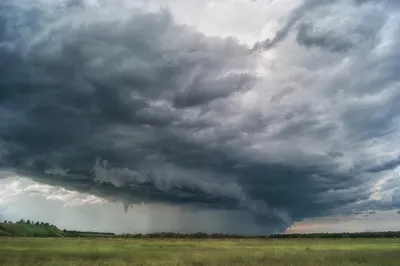
Spring and summer bring severe convective weather across the Tri-Cities. While East Tennessee does not experience the frequency of large tornadic events seen in Middle Tennessee's tornado alley, straight-line wind events, severe thunderstorm downbursts, and hail storms are regular occurrences. The Tennessee Department of Commerce and Insurance has reported average hail claim payouts exceeding $10,000 statewide. Most standard HO-3 homeowners policies in Tennessee cover wind and hail damage, but many carriers now apply separate wind or hail deductibles — often 1% to 2% of the insured dwelling value — that can mean $2,500 to $6,000 in out-of-pocket costs on a $300,000 home before coverage kicks in.
Flooding and the Watauga River Corridor
Flooding is the risk many Johnson City homeowners underestimate. According to First Street Foundation climate data, Washington County carries a moderate overall flood risk, with approximately 8,771 properties facing a meaningful flood risk over a 30-year mortgage period — representing about 14.7% of all county properties. The county faces a 26% probability of experiencing at least one major flooding event over that same 30-year window.
The Watauga River system is the primary flood driver in the county. Although the TVA's Watauga Dam in Carter County provides significant flood control for downstream communities, dam release events during extreme rainfall can still inundate riverside properties. During Hurricane Helene in September 2024, the Watauga River at Elizabethton reached five feet above flood stage, its highest level since 1940, even with TVA actively managing reservoir storage. TVA estimated it prevented $406 million in flood damage region-wide during that event — illustrating both the scale of potential exposure and the limits of infrastructure-based protection.
Critically, standard homeowners insurance does not cover flood damage. Both the City of Johnson City and Washington County actively participate in the National Flood Insurance Program (NFIP), making federally subsidized flood insurance available to property owners. Homeowners near the Watauga River, Brush Creek, or any other designated floodplain should strongly consider a separate NFIP or private flood insurance policy regardless of whether their mortgage lender requires it.
Local Factors That Move Your Premium
Beyond weather, several property-specific and location-specific variables shape what any individual Johnson City homeowner will pay for coverage. An experienced independent agent can help identify which factors are working in your favor — and which ones may require attention before your next renewal.
Home Age and Historic Districts
Johnson City contains a variety of historic neighborhoods with homes dating to the late 19th and early 20th centuries. Older homes carry higher insurance costs for several interconnected reasons: they may feature original wiring, plumbing, and load-bearing systems that present greater fire and water risk; their replacement and restoration costs often significantly exceed market value; and properties in recognized historic districts may face strict preservation requirements that limit the use of modern, cost-efficient materials during repairs. As MoneyGeek data shows, a Tennessee home built around 1980 costs an average of $3,203 per year to insure, compared to $1,758 per year for a home built in 2020 — an 82% difference driven largely by construction quality, systems age, and replacement cost considerations. Owners of older Johnson City homes should confirm their policies carry guaranteed or extended replacement cost coverage, as well as ordinance and law endorsements to cover the cost of code-required upgrades during reconstruction. Specialized coverage for historic properties is available and worth exploring if your home is listed on a local or state historic register.
Roof Type and Age
The roof is the single most scrutinized element of a home during the underwriting process, and for good reason: it is the first line of defense against the wind, hail, ice, and heavy precipitation events that drive the majority of homeowners claims in Tennessee. Carriers evaluate roof material, age, and condition. Asphalt shingle roofs older than 15 to 20 years may attract higher premiums or even coverage limitations from certain carriers. Metal roofs and impact-resistant Class 4 shingles, by contrast, often qualify for premium discounts — a meaningful savings in a region where hail and ice storm damage are recurring concerns. If your roof is aging, the cost of replacement may pay for itself in sustained premium reductions and improved claim outcomes.
Proximity to Fire Stations and Hydrants
Insurers use ISO Public Protection Classifications (PPCs) to assess the fire protection infrastructure serving your address. Homes within close proximity to a staffed fire station and a functioning fire hydrant receive better PPC ratings, which translate to lower premiums. Johnson City's urban core and established suburban neighborhoods generally benefit from strong fire protection. However, properties on the outer edges of the county — particularly in rural Washington County where unincorporated areas rely on volunteer fire departments and may have greater distances to hydrants — can face meaningfully higher fire-coverage surcharges.
Credit Score
Tennessee, like most states, permits carriers to use credit-based insurance scores as a rating factor. NerdWallet data shows that Tennessee homeowners with poor credit pay an average of $8,170 per year — roughly 94% more than homeowners with good credit at the same coverage level. Improving your credit score before shopping for or renewing homeowners coverage can produce significant premium savings.
Claims History
Filing a claim increases your premium. MoneyGeek estimates that a single claim raises the average Tennessee homeowners premium by approximately $485 per year; two claims add an average of $892 annually over a clean-record baseline. For minor damage that falls near your deductible amount, paying out of pocket and preserving a claim-free record may be the financially sound choice over the long run.
Flood Zone Awareness in Washington County
Washington County's participation in the NFIP means that FEMA Flood Insurance Rate Maps (FIRMs) have been developed for the county, designating Special Flood Hazard Areas (SFHAs) — primarily Zone A designations reflecting a 1% annual flood chance, or a 26% probability over a 30-year mortgage. Properties within an SFHA where a federally backed mortgage is in place are generally required by lenders to carry flood insurance.
Importantly, Washington County's own floodplain regulations note that Johnson City operates its own separate floodplain management program as an independent NFIP-participating municipality. This means floodplain determinations within Johnson City city limits are governed by city ordinance, not county rules. Homeowners in recently annexed areas or near any of the county's river and creek systems should verify their specific flood zone designation through the FEMA Flood Map Service Center before assuming they are outside a designated hazard area.
Properties outside designated SFHAs can still flood — First Street Foundation research consistently finds that FEMA maps underestimate actual flood exposure, particularly for rainfall-driven flooding events that affect properties well away from mapped river channels. Preferred-rate flood insurance policies are available to properties in low- to moderate-risk zones at considerably lower premiums than SFHA rates.
ETSU, Rental Properties, and the Student Housing Market
East Tennessee State University brings roughly 12,000 to 14,000 students to Johnson City, creating a dense rental housing market in and around the campus area on the city's north side. This dynamic has important insurance implications for homeowners who rent to students or who own investment properties near ETSU.
Standard homeowners insurance is written for owner-occupied residences. If you are renting a home or a unit — even to a family member — your coverage obligations change materially. Owner-occupied policies typically exclude liability arising from rental activity, and personal property coverage does not extend to a tenant's belongings. Landlord insurance (also called a dwelling fire policy or rental dwelling policy) is the appropriate product for investment properties, covering the structure, loss of rental income, and landlord liability. All Seasons Insurance Group offers investment property insurance tailored to property owners who have converted a residence into a rental.
Tenants renting near ETSU should carry renters insurance to protect their personal property and provide liability coverage — a point some student-focused housing operators in the area explicitly communicate to residents. Renters insurance is typically among the most affordable insurance products available, often running $15 to $30 per month in a market like Johnson City.
For homeowners considering whether the Johnson City market is right for a purchase — whether as a primary residence or an investment — Your Home Sold Guaranteed Realty provides localized real estate expertise across the Tri-Cities region and can help buyers understand the intersection of property values, neighborhood characteristics, and insurance risk before they close.
About All Seasons Insurance Group
All Seasons Insurance Group is an independent insurance agency serving homeowners, drivers, business owners, and property investors across East Tennessee. Operating since 2021, the agency works with multiple reputable carriers to find competitive rates and appropriate coverage for each client's individual risk profile. Because the agency is independent — not captive to a single insurer — agents can compare options across the carrier market rather than being limited to one company's product lineup.
The agency offers homeowners insurance, auto insurance, business insurance, farm insurance, and investment property insurance. For Washington County residents, that breadth matters: a homeowner with a historic property, a detached rental unit, and a farm outbuilding has meaningfully different coverage needs than someone in a recently built subdivision, and an independent agent can address all of those needs within a coordinated policy structure. All Seasons Insurance Group can be reached at asigtn.com or by phone at 865-263-1400.
Frequently Asked Questions
How much does homeowners insurance cost in Johnson City, Tennessee?
Average homeowners insurance costs in Johnson City range from approximately $1,432 to $3,270 per year depending on coverage level, data source, and individual risk factors. The lower end of that range reflects policies with around $200,000 in dwelling coverage, while the upper end reflects $400,000 or more. Johnson City consistently ranks among the least expensive cities in Tennessee for homeowners insurance, with premiums running below the state average. Your actual rate will depend on your home's age, construction, roof condition, claims history, credit score, and the specific carriers available in your ZIP code.
Does homeowners insurance in Johnson City cover flooding?
No. Standard homeowners insurance policies — including HO-3 policies, which are the most common type in Tennessee — do not cover flood damage. Flooding must be covered under a separate flood insurance policy, either through the National Flood Insurance Program (NFIP) or a private flood insurer. Both the City of Johnson City and Washington County participate in the NFIP, meaning residents can access federally backed flood insurance. Homeowners near the Watauga River, Brush Creek, or any other waterway should verify their flood zone designation through the FEMA Flood Map Service Center and strongly consider purchasing a flood policy even if their lender does not require one.
What weather events most commonly cause homeowners insurance claims in Johnson City?
The most common weather-related homeowners claims in the Johnson City area involve wind damage, hail damage to roofs and siding, ice storm damage from winter freezing rain events, and water intrusion following heavy convective storms. Ice storms are a particular concern in Washington County given the region's Appalachian topography, which promotes cold air damming and freezing rain accumulation. Standard HO-3 policies cover wind, hail, and ice damage to the dwelling structure, but many carriers apply separate wind or hail deductibles that can be 1–2% of the insured dwelling value. Flood damage is not covered under standard policies and requires separate flood insurance.
Do older or historic homes in Johnson City cost more to insure?
Yes. Older homes typically cost more to insure than newer construction for several reasons: they may have aging electrical, plumbing, and structural systems; their replacement or restoration costs often exceed market value; and homes in designated historic districts may face preservation requirements that make reconstruction more expensive. Tennessee data shows that homes built around 1980 cost an average of 82% more to insure than homes built in 2020. Owners of historic Johnson City homes should look for policies that include guaranteed or extended replacement cost coverage and ordinance-or-law endorsements, which help cover the cost of code-required upgrades during reconstruction. An HO-8 policy may be appropriate for homes where replacement cost significantly exceeds market value.
Is a separate policy needed if I rent out my Johnson City home or a unit on my property?
Yes. Standard homeowners insurance is designed for owner-occupied dwellings and generally does not cover rental activity. If you rent your home or a unit on your property — including short-term rentals — you typically need a landlord insurance policy (also called a dwelling fire or rental dwelling policy) that covers the structure, loss of rental income, and landlord liability. Tenants renting in Johnson City, including students near the ETSU campus, are responsible for insuring their own personal belongings and liability under a renters insurance policy, which is separate from any policy held by the property owner.
About the Author
All Seasons Insurance Group is a locally owned, independent insurance agency proudly serving Tennessee families and businesses since 2021. Founded by Tannor Giles and Preston Stewart, our licensed team is committed to finding the best coverage at competitive rates — because as an independent agency, we shop multiple carriers on your behalf to get you the right policy, not just the cheapest one.
With offices in Sevierville (1001 Parkway) and Knoxville (121 Suburban Rd), we specialize in home, auto, business, farm, renters, and investment property insurance across East Tennessee — from the Smoky Mountains to Nashville.
Ready to review your coverage? Call us at (865) 263-1400 or get a free quote online.
Seasons change. So should your coverage.