After a hard Tennessee rain, a lot of homeowners find water where it should not be: a soaked basement carpet, a puddle under the back door, a wet crawlspace. Whether a National Flood Insurance Program (NFIP) policy responds starts with one definition. The standard Dwelling Form, published in federal regulations at 44 CFR Part 61, Appendix A(1), spells out what a "flood" is, and it is narrower than everyday speech.
| Question | What the NFIP Dwelling Form says |
|---|---|
| How big must the water event be? | Two or more acres of normally dry land, or two or more properties (one of them yours) |
| Where must the water come from? | Overflow of inland or tidal waters; unusual and rapid accumulation or runoff of surface waters; or mudflow |
| Is a mudslide a mudflow? | Not if it is a landslide, slope failure, or saturated soil sliding downhill; those are not mudflows |
| Earth movement (including sinkholes) | Not insured, even if caused by flood |
| Rain, snow, sleet, hail | Not insured as such |
| Sewer backup, sump overflow, seepage | Not insured unless a flood in the area is the proximate cause |
Source: 44 CFR Part 61, Appendix A(1).
The two-acre, two-property test
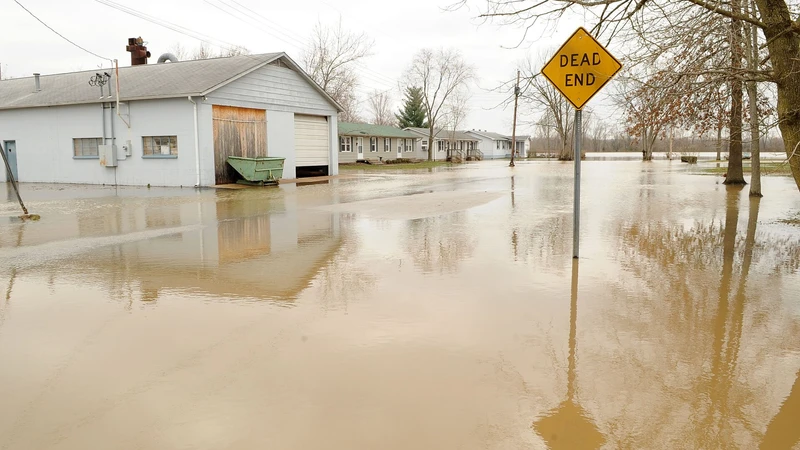
The policy defines flood as a general and temporary condition of partial or complete inundation of two or more acres of normally dry land, or of two or more properties, one of which is yours. Water confined to your house alone, with no wider event outside, generally does not meet that test. Water spreading across your yard and a neighbor's yard from a rising creek is the kind of event the definition describes.
Three sources of flood water
The inundation must come from one of three sources: overflow of inland or tidal waters, such as a creek or river leaving its banks; unusual and rapid accumulation or runoff of surface waters from any source, such as a flash flood running down a hollow; or mudflow. The definition also includes collapse or subsidence of land along the shore of a lake or similar body of water, caused by erosion or undermining from waves or currents exceeding anticipated cyclical levels.
Mudflow is not a landslide
East Tennessee's hills make this distinction important. The policy defines mudflow as a river of liquid and flowing mud on the surface of normally dry land, as when earth is carried by a current of water. It states that other earth movements, such as landslide, slope failure, or a saturated soil mass moving by liquidity down a slope, are not mudflows.
Earth movement and sinkholes are excluded
The Dwelling Form does not insure loss caused directly by earth movement, even if a flood causes the earth movement. Its examples include earthquake, landslide, land subsidence, sinkholes, destabilization or movement of land caused by water accumulating in the subsurface, and gradual erosion. The policy does pay for mudflow and for shoreline subsidence from erosion that fit its definition of flood. For how sinkholes are handled on the homeowners side, see Sinkholes, Hillsides and Homeowners Insurance in Knox County, TN
Rain and backups
The policy lists rain, snow, sleet, hail, or water spray among causes it does not insure. It also excludes water that backs up through sewers or drains, discharges or overflows from a sump pump, or seeps or leaks through the property, unless there is a flood in the area and the flood is the proximate cause. A backup during a dry week is a homeowners endorsement question: Knoxville Water Backup Insurance: Why Finished Basements, Sump Pumps, and Heavy Rain Deserve a Coverage Review
There must be physical damage
The policy defines direct physical loss by or from flood as loss or damage directly caused by a flood, and says there must be evidence of physical changes to the property. Photos of high-water lines, damaged drywall, and wet insulation help document that.
What to do with this
- Know where water could come from on your lot: a creek, a low road, a slope above the house.
- Remember there is usually a 30-day wait for a new policy: New Tennessee flood insurance usually waits 30 days to start, and federal rules list only three exceptions.
- Review what the policy leaves out entirely: An NFIP flood policy does not pay for decks, fences, landscaping, cars, or a hotel while your home is repaired.
- If you have a basement, read Tennessee homeowners with basements should know an NFIP flood policy pays for only a short list of items below ground level.
- When water is rising, loss-avoidance coverage may help with sandbags and moving contents: An NFIP flood policy can pay up to $1,000 for sandbags and pumps, and another $1,000 to move belongings to safety.
The full homeowner overview is here: Tennessee Flood Insurance: Everything Homeowners Need to Know in 2026
This article is informational only. It summarizes the federal Standard Flood Insurance Policy and is not legal advice. It does not promise coverage, eligibility, or any claim result; your policy, its declarations page, and the facts of the loss control.
Related reading from All Seasons
- Tennessee Flood Insurance: Everything Homeowners Need to Know in 2026
- An NFIP flood policy does not pay for decks, fences, landscaping, cars, or a hotel while your home is repaired.
- Tennessee homeowners with basements should know an NFIP flood policy pays for only a short list of items below ground level.
- Knoxville Water Backup Insurance: Why Finished Basements, Sump Pumps, and Heavy Rain Deserve a Coverage Review
- New Tennessee flood insurance usually waits 30 days to start, and federal rules list only three exceptions.
- An NFIP flood policy can pay up to $1,000 for sandbags and pumps, and another $1,000 to move belongings to safety.
- Sinkholes, Hillsides and Homeowners Insurance in Knox County, TN
Free policy review
All Seasons Insurance Group offers a free personal policy review. Call 865-263-1400 or visit asigtn.com/get-a-quote/. This article is informational only and does not promise coverage or eligibility; your policy forms control. Seasons change. So should your coverage.
What counts as a flood under an NFIP policy?
The Dwelling Form defines flood as a general and temporary condition of partial or complete inundation of two or more acres of normally dry land, or two or more properties, one of which is yours.
Where does the water have to come from?
Overflow of inland or tidal waters, unusual and rapid accumulation or runoff of surface waters from any source, or mudflow.
Is a landslide covered as a mudflow?
No. The policy says landslide, slope failure, or a saturated soil mass moving down a slope are not mudflows.
Does NFIP flood insurance cover sinkholes?
The policy does not insure loss caused directly by earth movement, even if caused by flood, and lists sinkholes as an example.
Is rain coming through the roof a flood claim?
No. The policy lists rain, snow, sleet, hail, or water spray among the causes it does not insure.
Does flood insurance cover sewer backup?
Only when there is a flood in the area and the flood is the proximate cause of the backup, sump overflow, or seepage.
Do I need to show physical damage?
Yes. The policy says direct physical loss by or from flood requires evidence of physical changes to the property.
How can All Seasons help after reading this?
Call 865-263-1400 or visit asigtn.com/get-a-quote/ for a free personal policy review. Informational only; no coverage promises. Seasons change. So should your coverage.